
Our Structural Project Gallery
Check out some of our favorite structural remodeling and repair projects
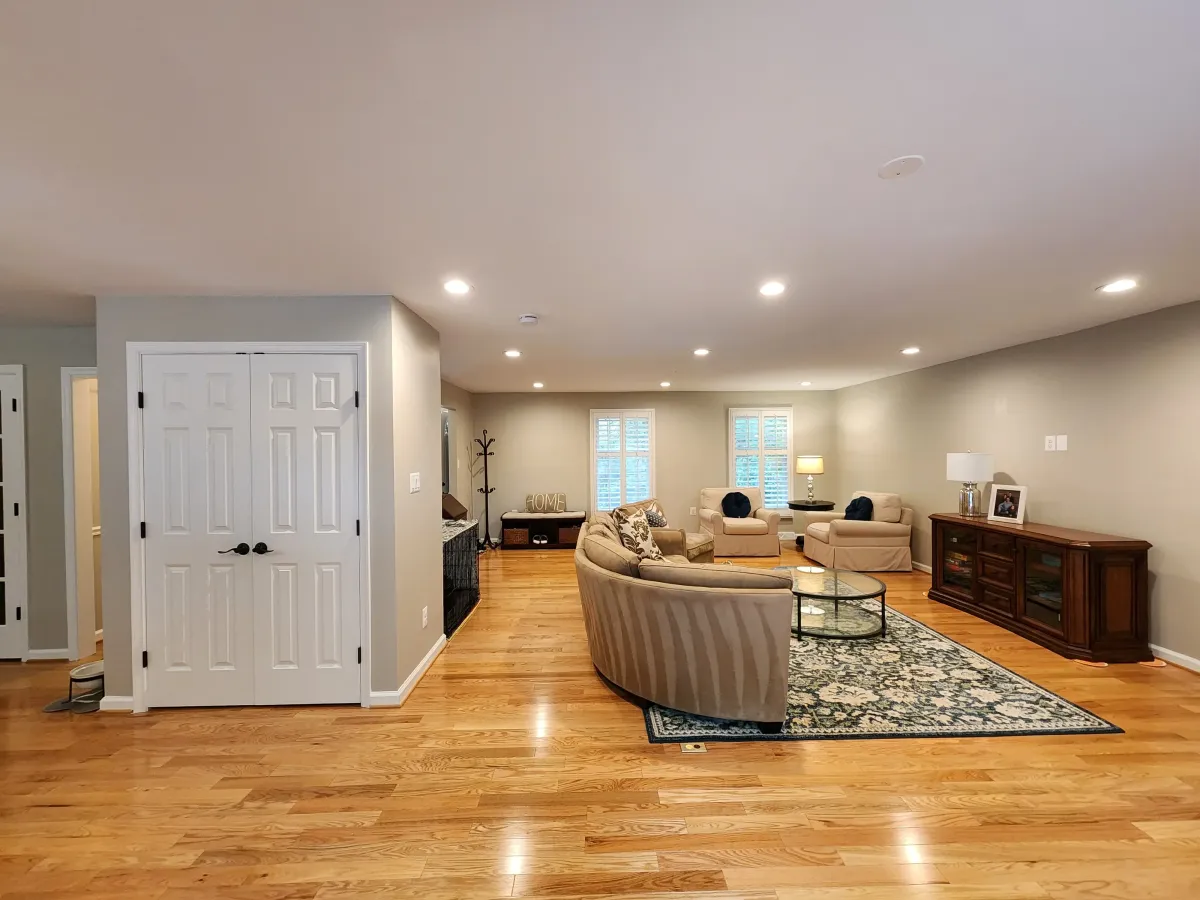
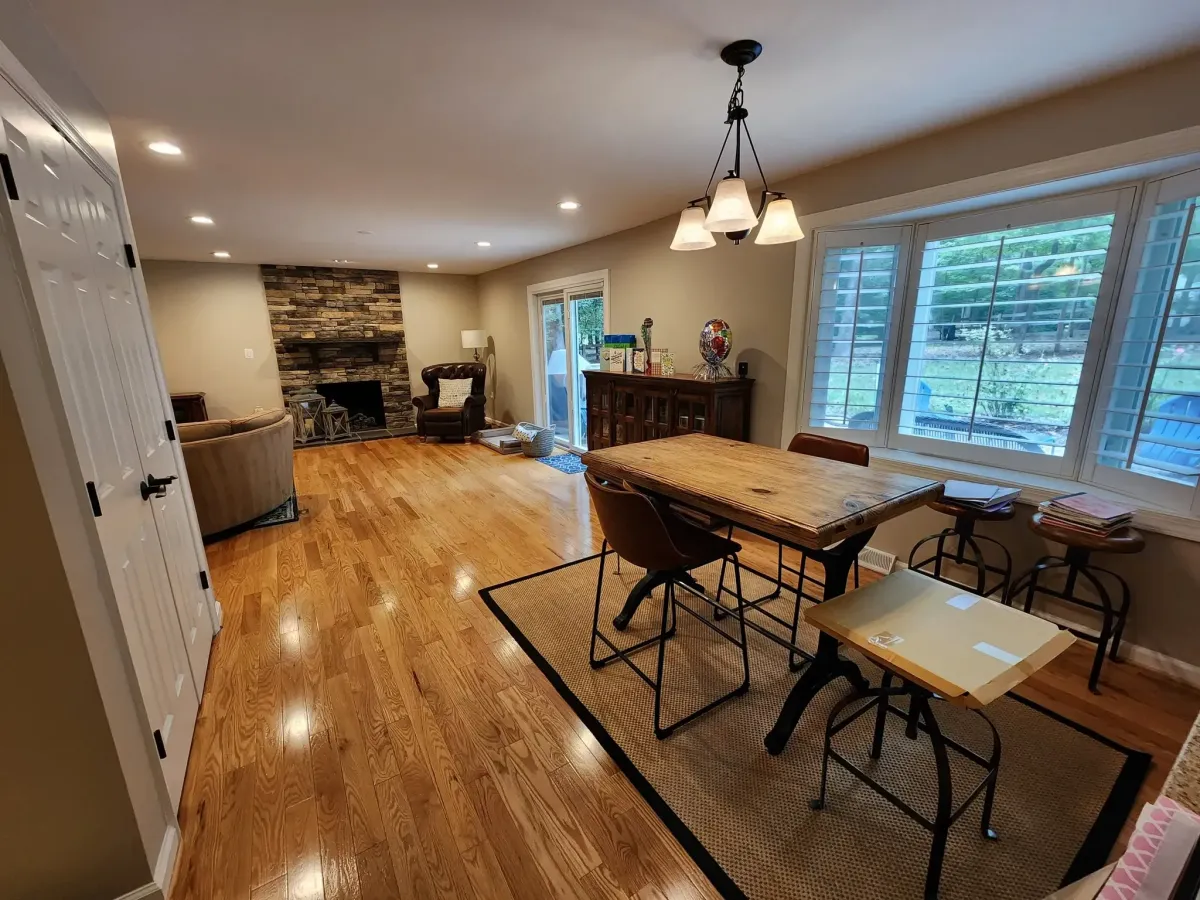
Vienna Virginia — 1980s Closed Floor Plan Transformed into Open Concept Living Space
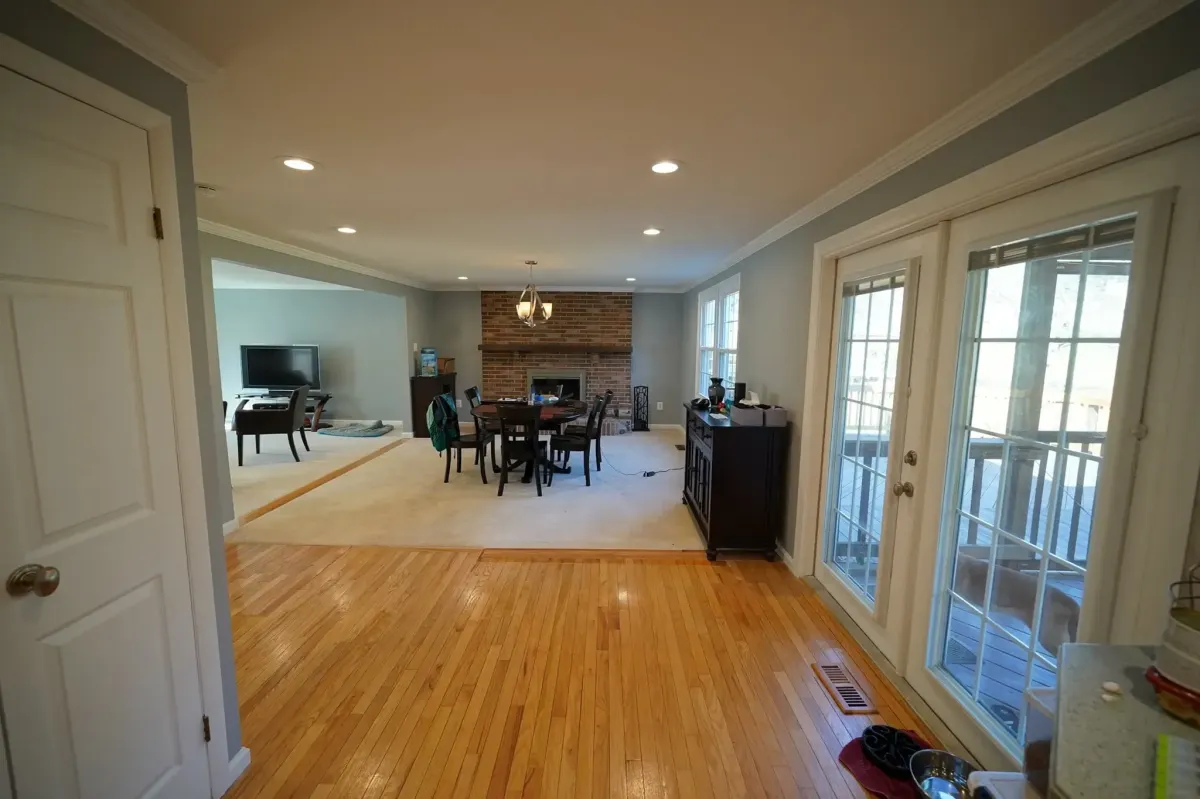
This Vienna Virginia home had a typical 1980s floor plan — closed off rooms, a narrow hallway, and poor natural light throughout the main level. Our client hated having to shout between rooms, and every family gathering ended with guests bunching up in the hallway taking off their coats while everyone got in each other's way in the kitchen. The problem wasn't the size of the home — it was how the space was divided. We like to say you don't always need more space, you just need to use what you have more efficiently. They needed a plan to open the space, remove the bottleneck, and get more light — both natural and artificial — flowing through the entire main level.
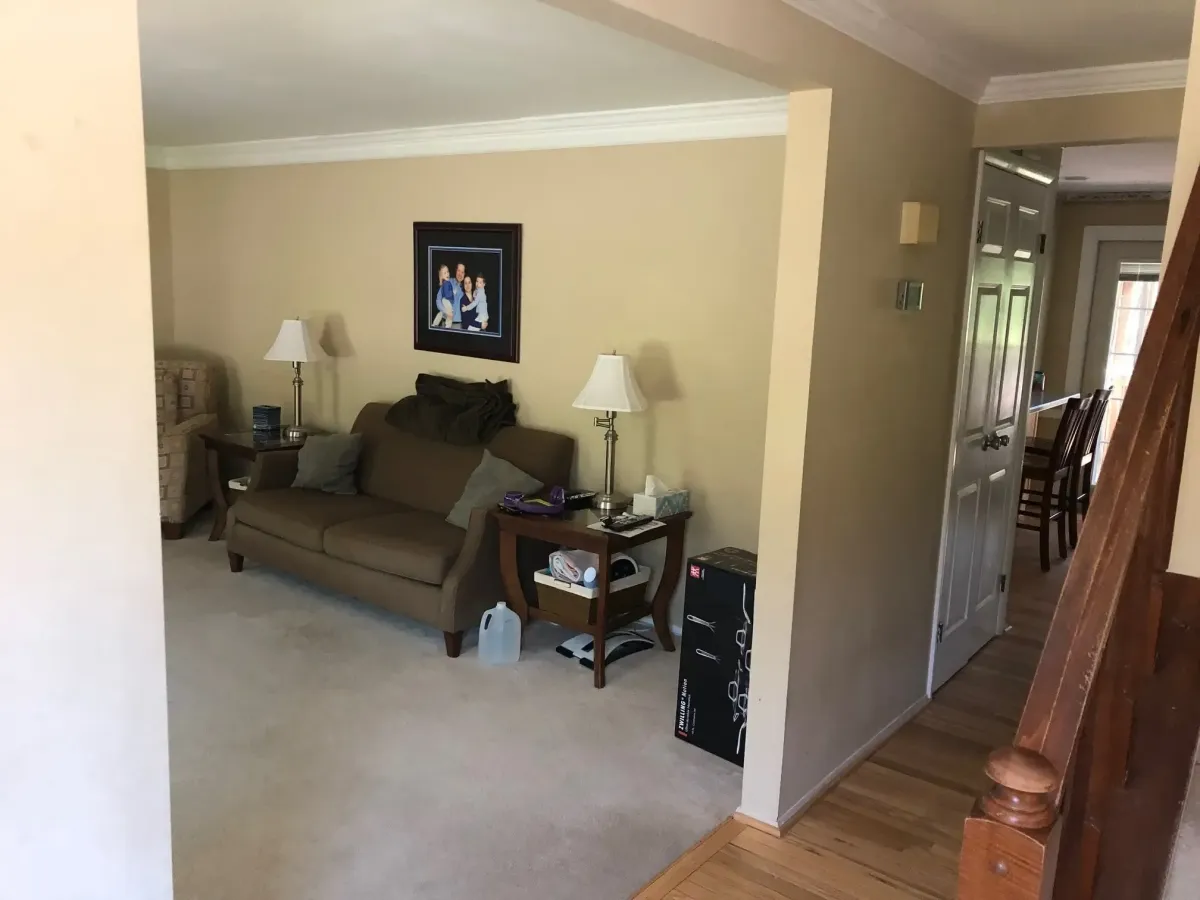
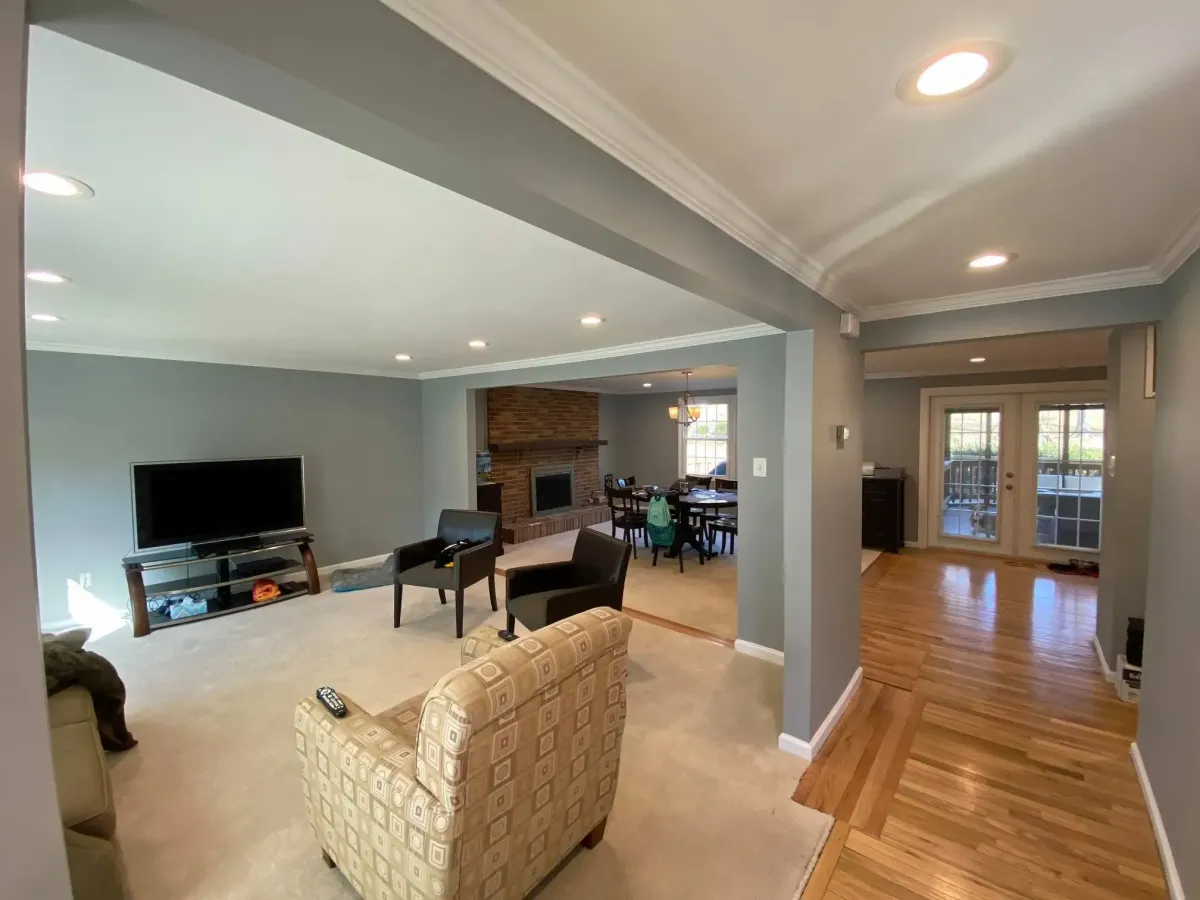
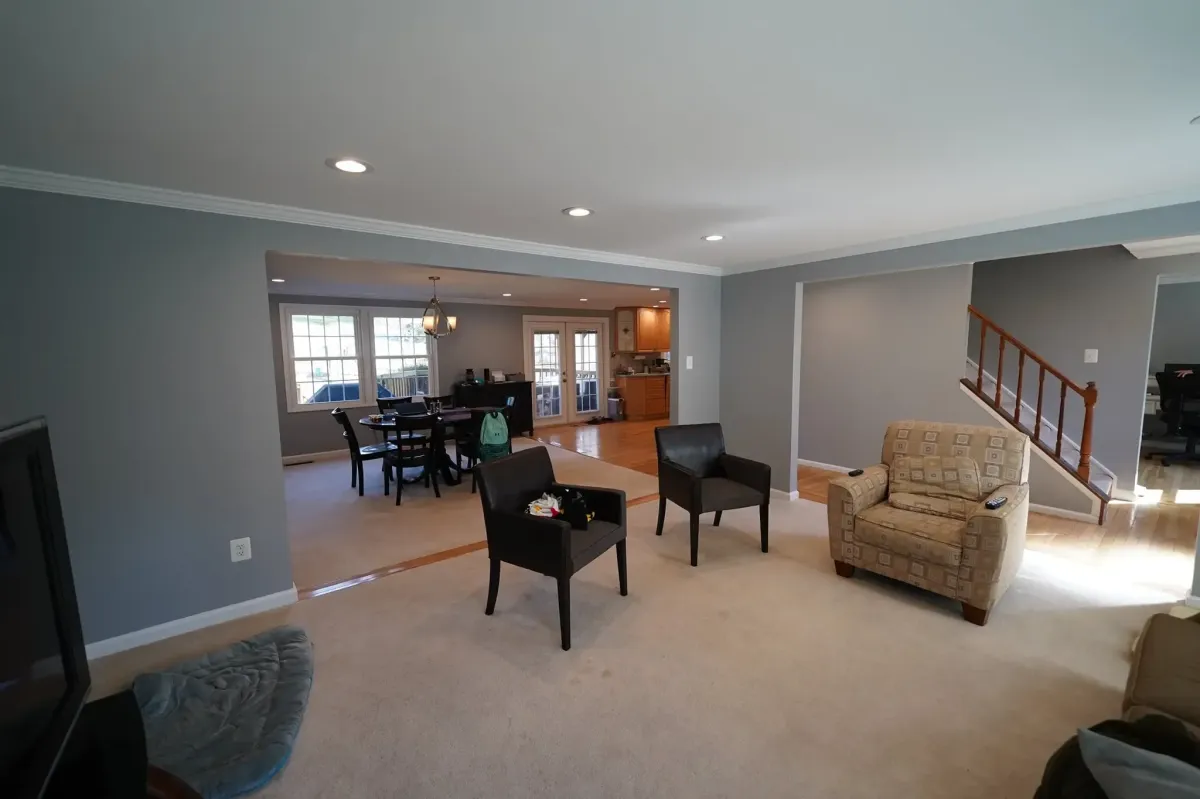
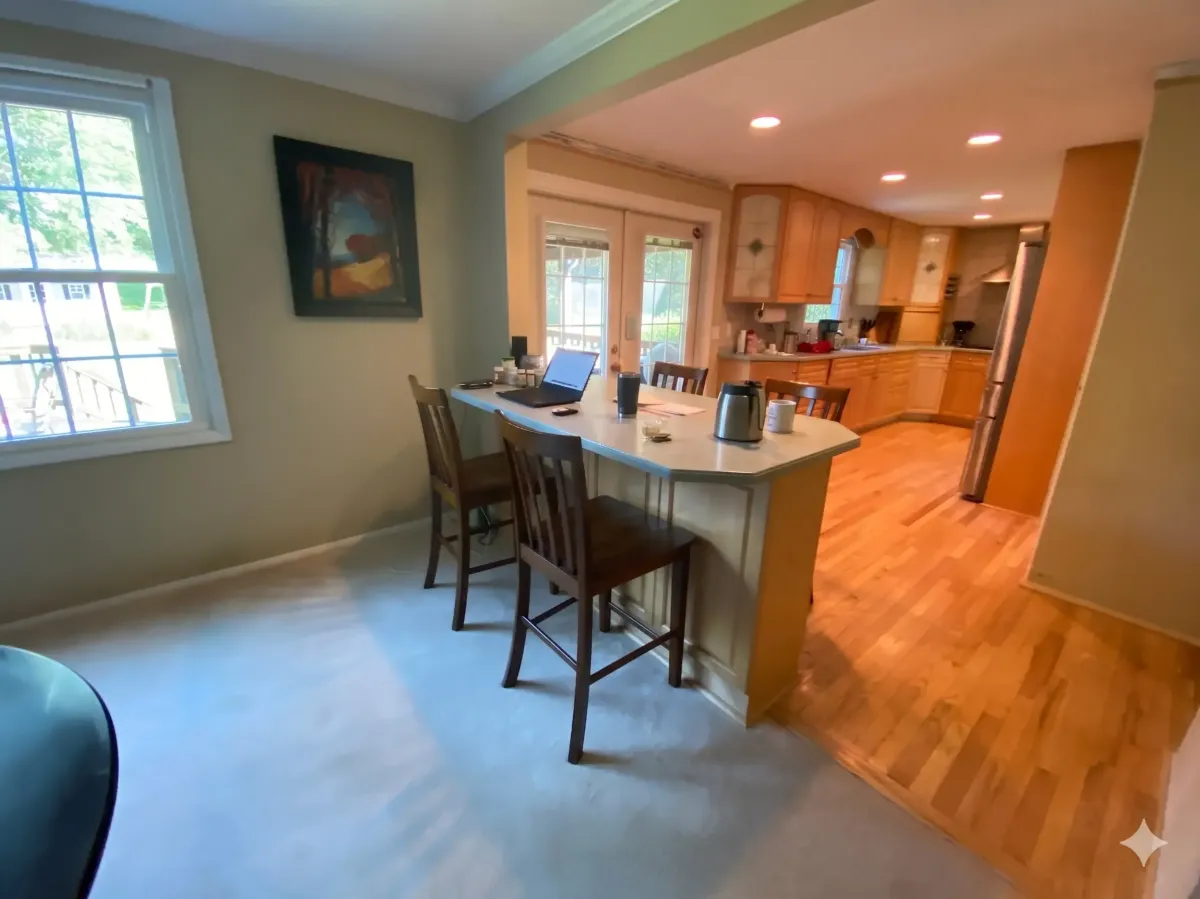
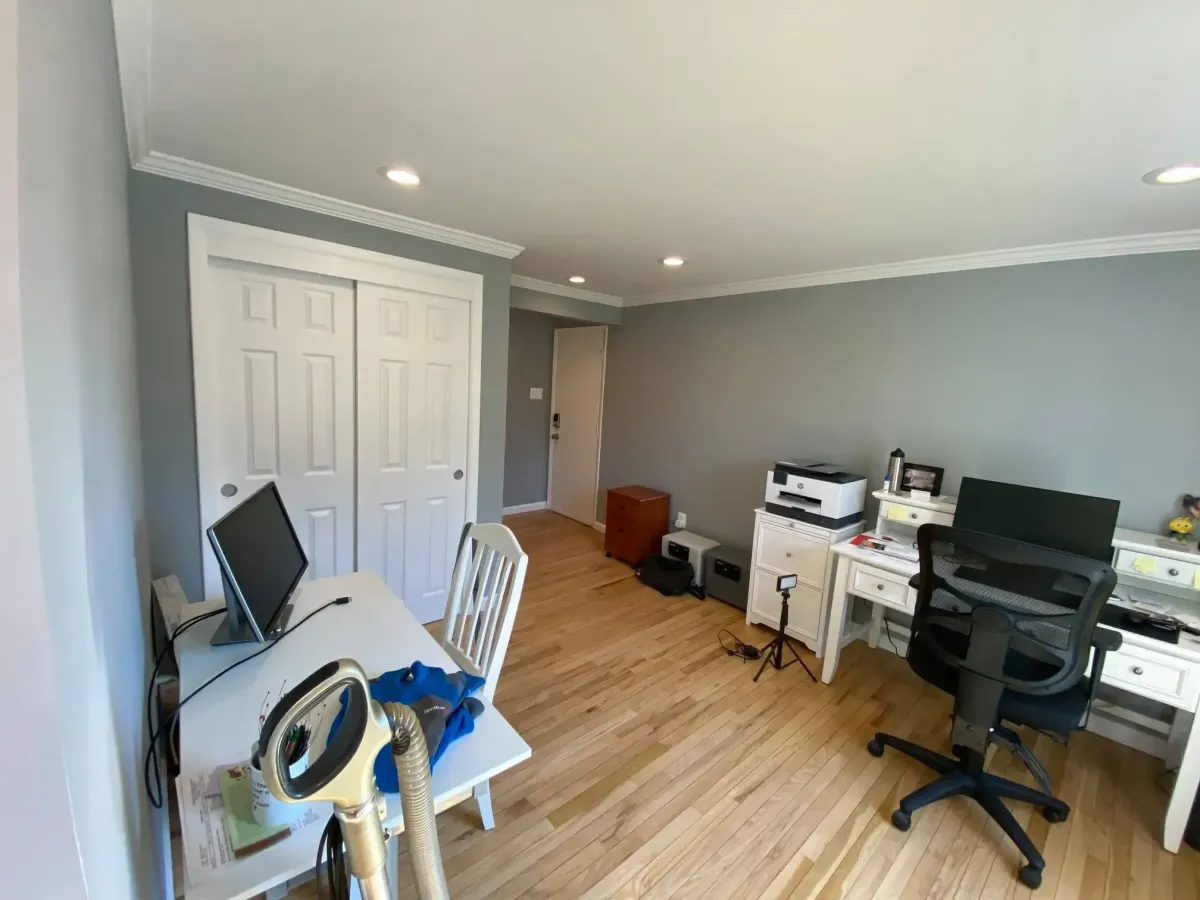
The structural work involved removing the load-bearing wall between the family room and living room and replacing it with a 12-foot LVL beam — to carry the load across the new opening. A drop beam was used both for cost and the client wanted to maintain some definition between the spaces rather than creating a fully open floor plan. We also removed the partition wall between the hallway and living room and the partition wall between the kitchen and family room with the peninsula which completely transforming how the entire main level flows and feels. We widened the hallway and added a large coat closet to the front office room. The result is a Vienna home that feels completely redesigned without adding a single square foot.
Oakton Virginia Structural EIFS Garage Repair
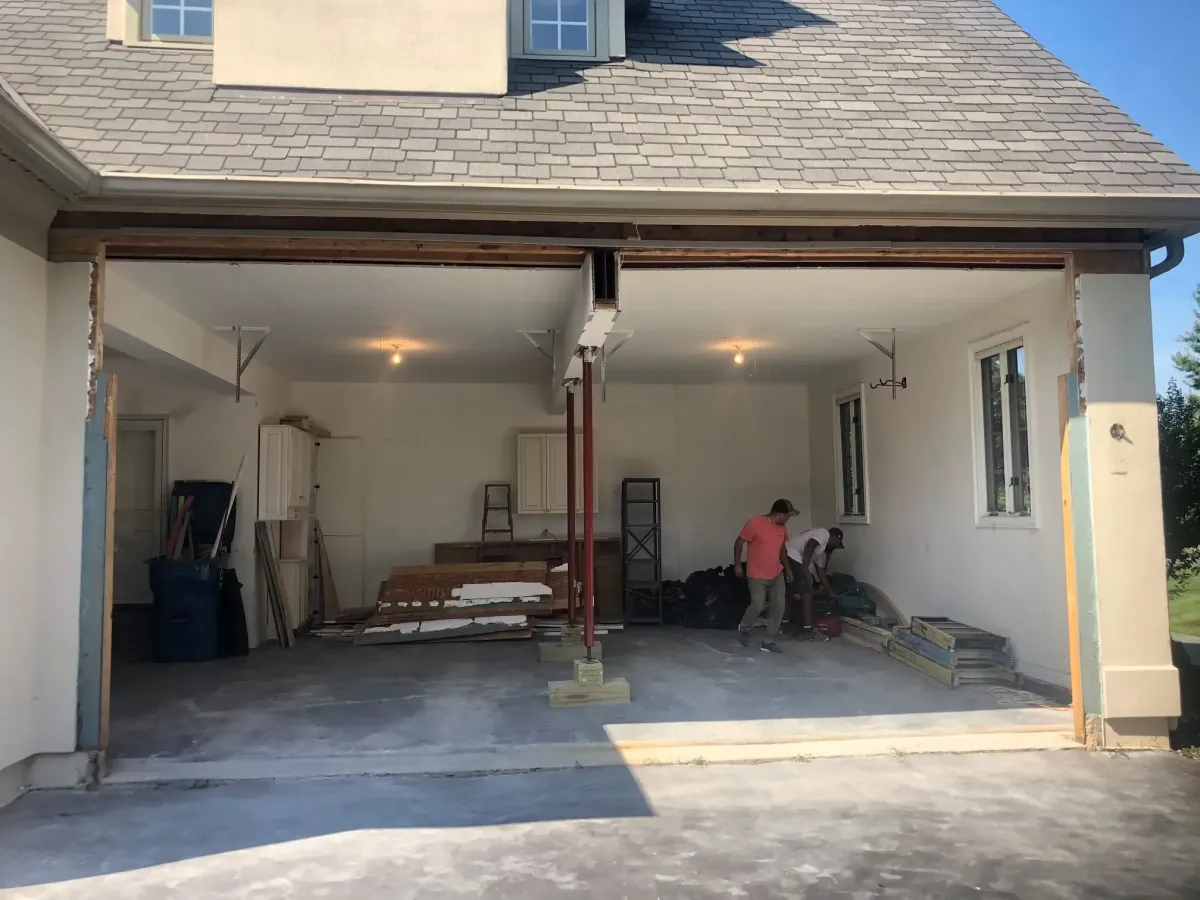
When a family member hit the gas instead of the brake and drove into the wall between the garage doors of this Oakton Virginia home, the impact pushed back the structure supporting the second floor master bedroom. When our team arrived, the only thing holding up the front wall were the tracks supporting the garage doors — a dangerous situation that required immediate action. We installed temporary steel columns to support the second floor, then performed a structural evaluation with our licensed engineer. Despite being a low speed crash, the shock wave from the impact rippled through the entire garage structure, loosening the ceiling drywall and resulting in cracks throughout the joints. This is a common consequence of vehicle impact damage that most homeowners don't anticipate — the visible damage at the point of impact is rarely the whole story.
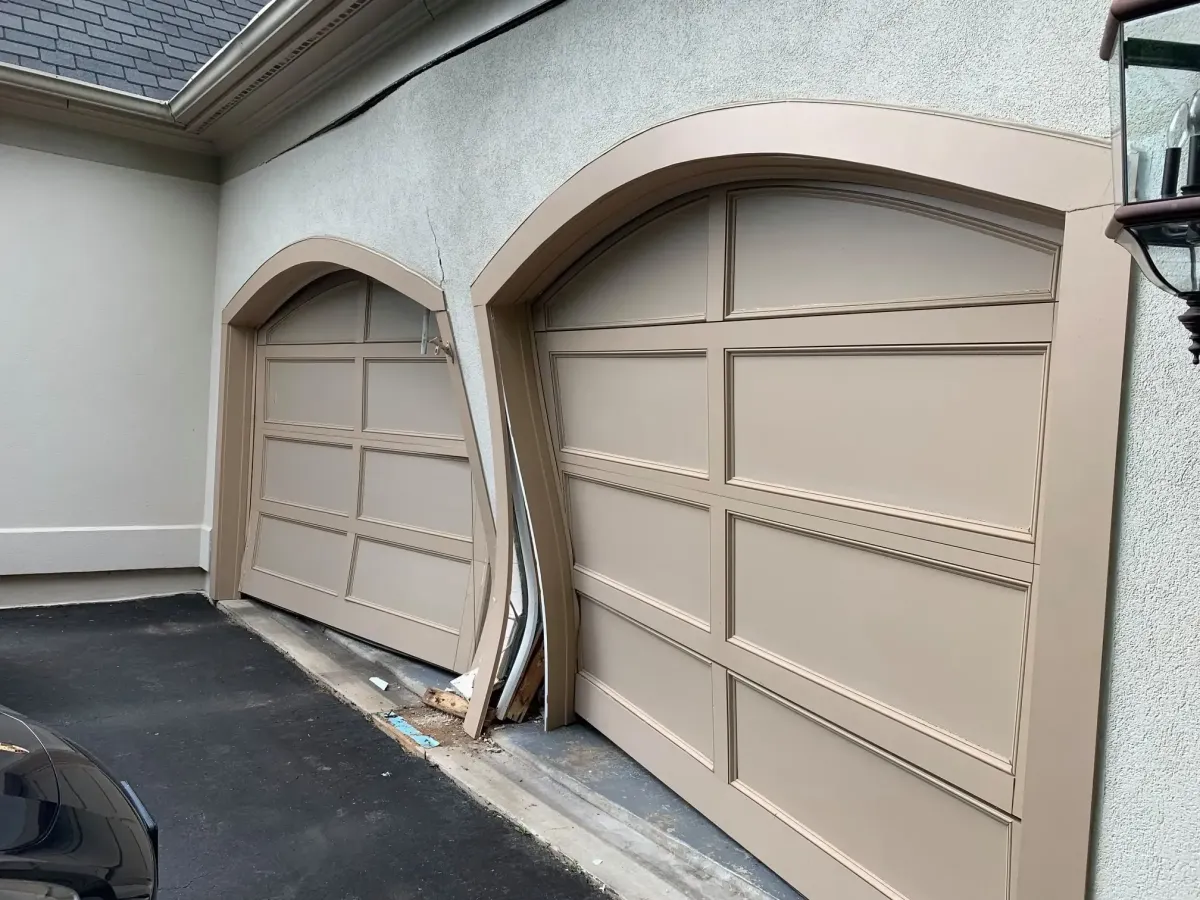
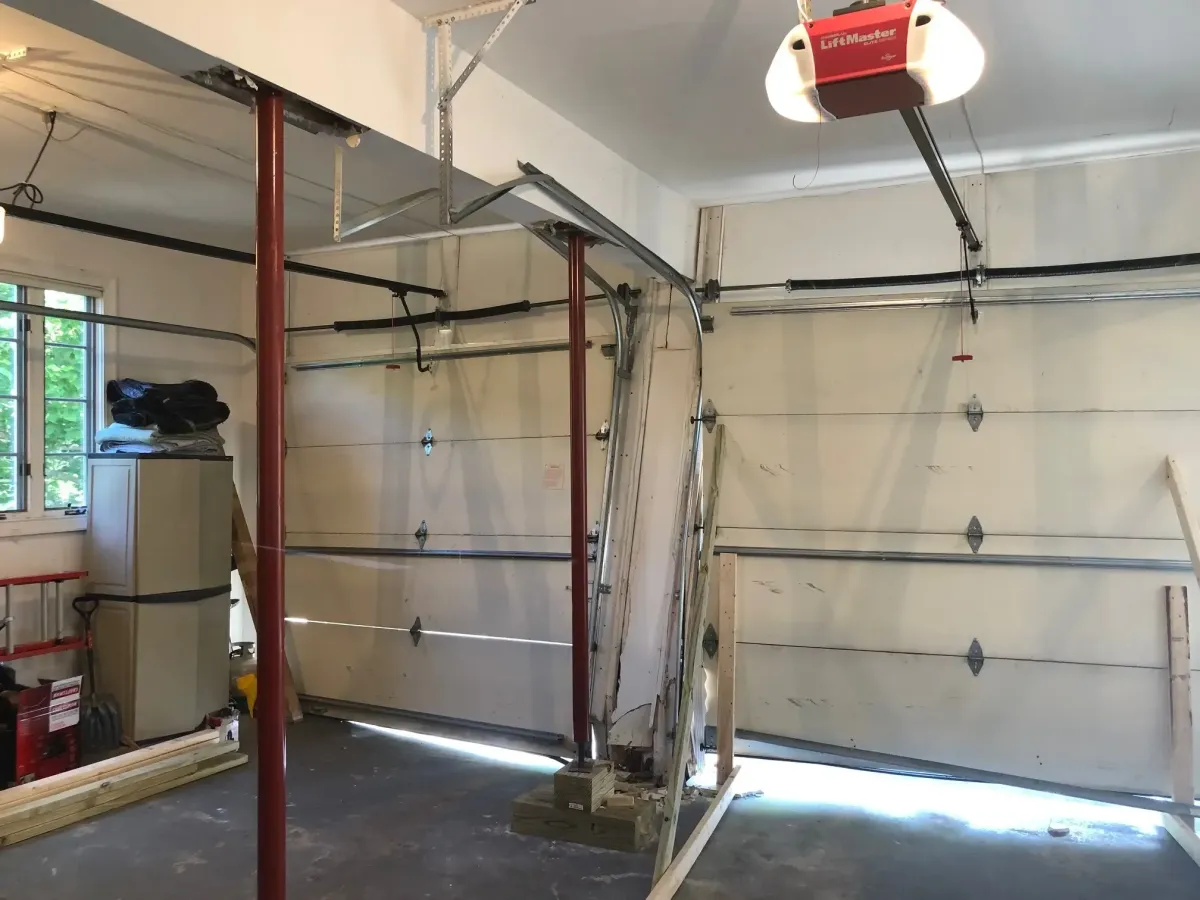
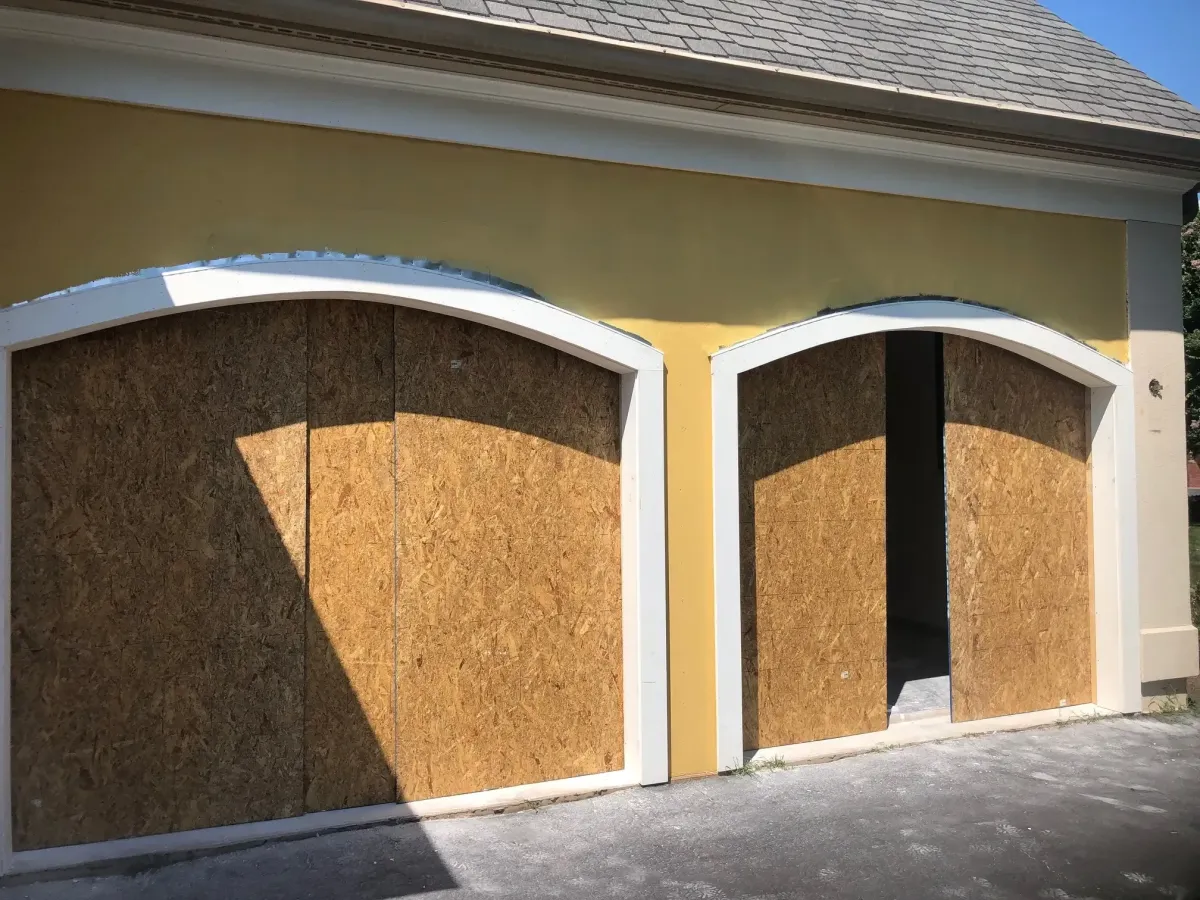
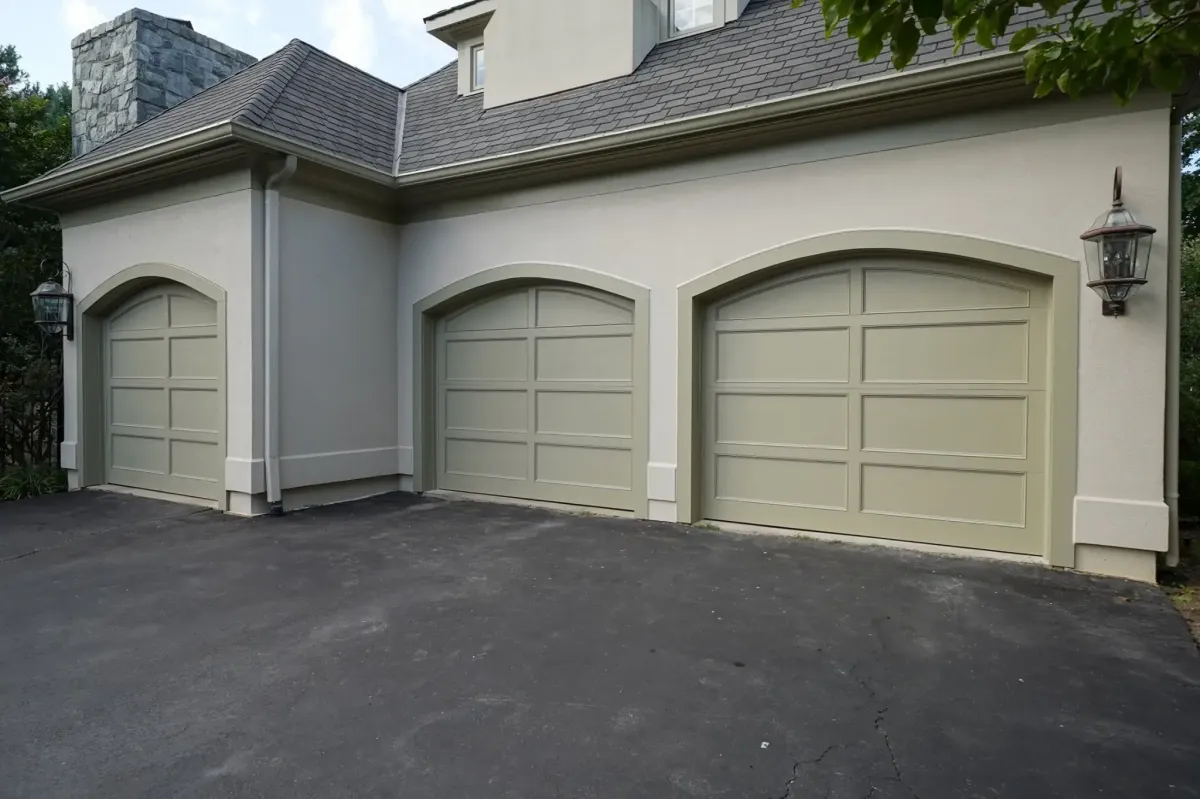
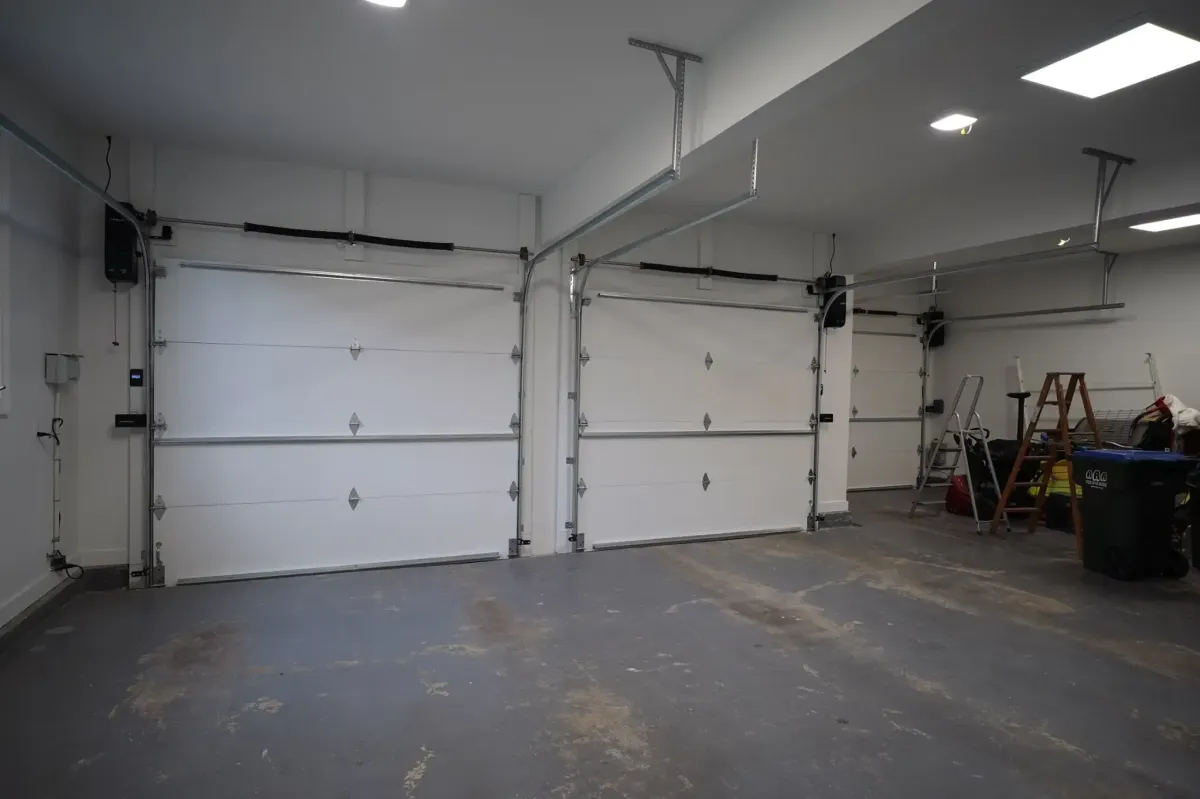
The repairs required a complete rebuild of the front wall, restoring the structural integrity that supports the second floor. The garage doors presented their own challenge — the original doors were custom built and the molding profile was not available from any manufacturer. Our garage door supplier delivered standard flat doors, and our team fabricated the matching molding on site and installed it before hanging the doors — preserving the original look of the home exactly as it was. We also installed new tracks and a WiFi enabled opener as part of the replacement. We screwed in all of the ceiling drywall to eliminate the joint cracks caused by the shock wave. On the exterior, our EIFS team — with 30 years of experience installing and matching stucco systems throughout Northern Virginia — replaced the damaged exterior finish, matching the original texture and color seamlessly. The completed project restored the home to full structural integrity with an exterior and garage facade indistinguishable from what existed before the impact.
Arlington Virginia — 100-Year-Old Home Fireplace, Chimney and Load Bearing Wall Removal
This 100-year-old Arlington Virginia home had a small living room and small dining room separated by a load-bearing wall, with an angled corner fireplace consuming a large portion of the living room — and a chimney that ran through the second floor, attic, and out through the center of the roof. The client wanted to open the two rooms into one and reclaim the space the fireplace had occupied for a century. Before any work began we tested for asbestos, brought in our structural engineer, and coordinated with multiple trades during the design phase to map out a sequencing plan. A project like this requires everyone to understand their role and timing before a single wall opens — because with a 100-year-old home, an active boiler exhaust running through the chimney, and a roof penetration at the center of the ridge, there is no room for improvisation.
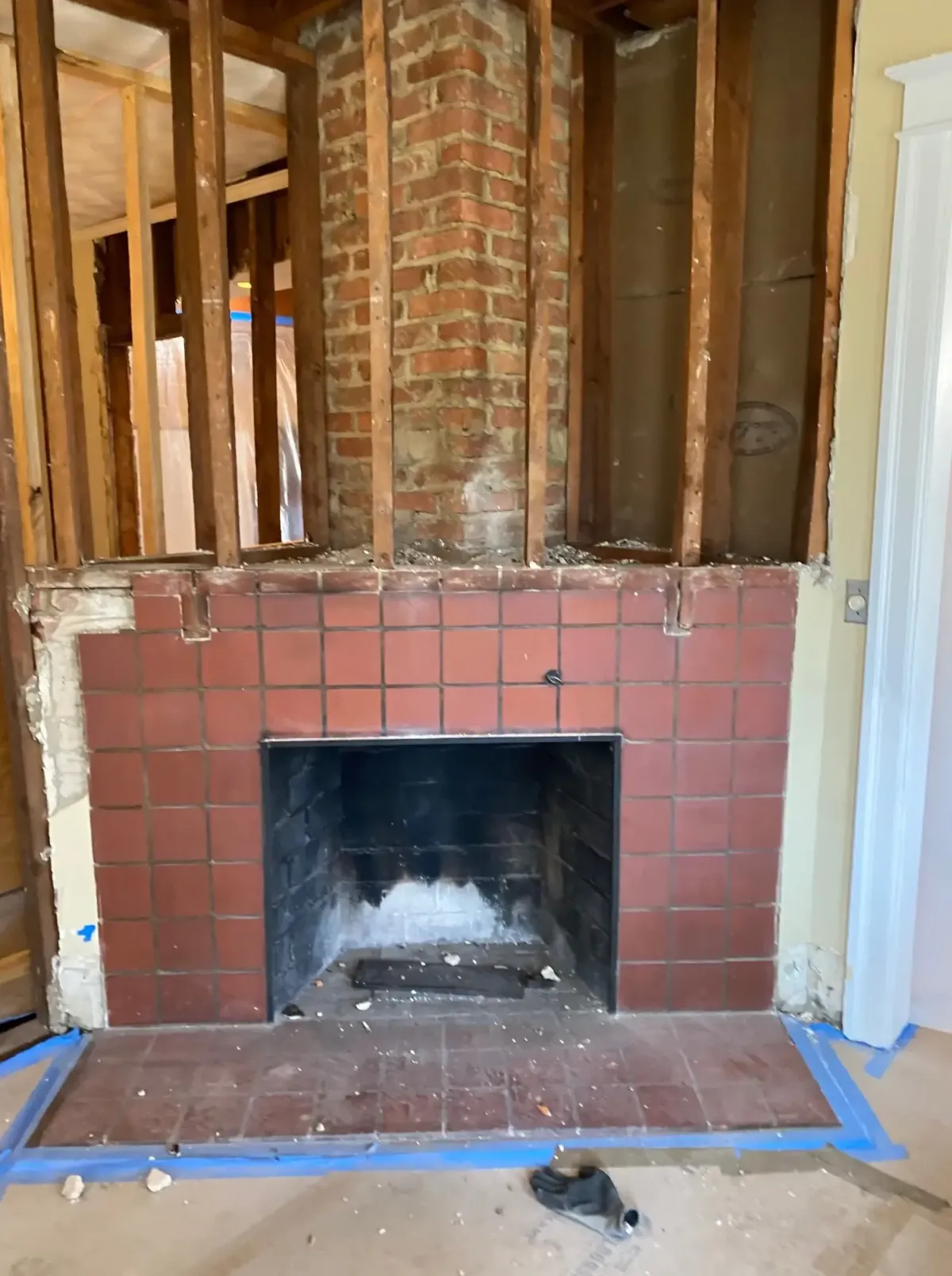
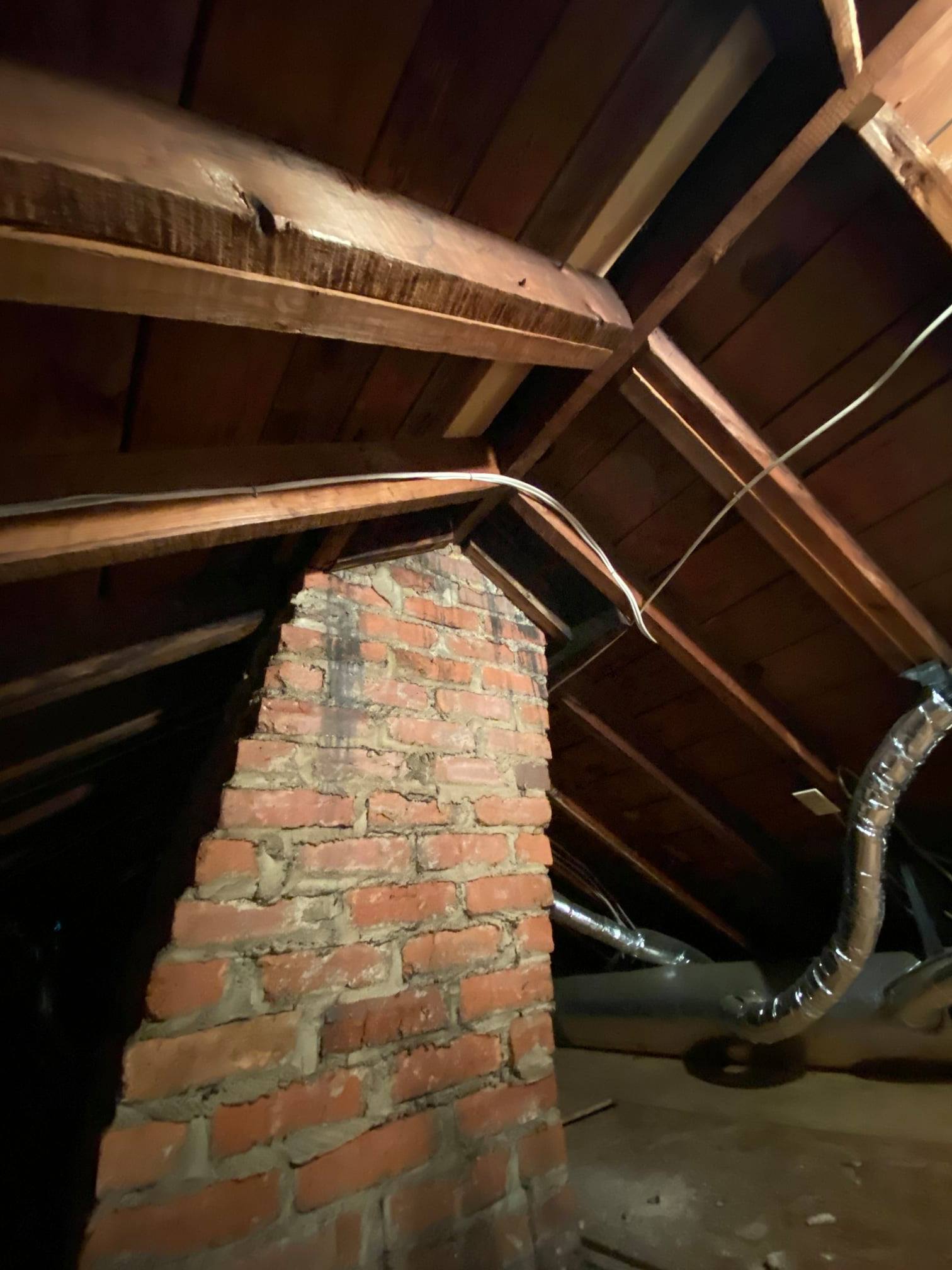
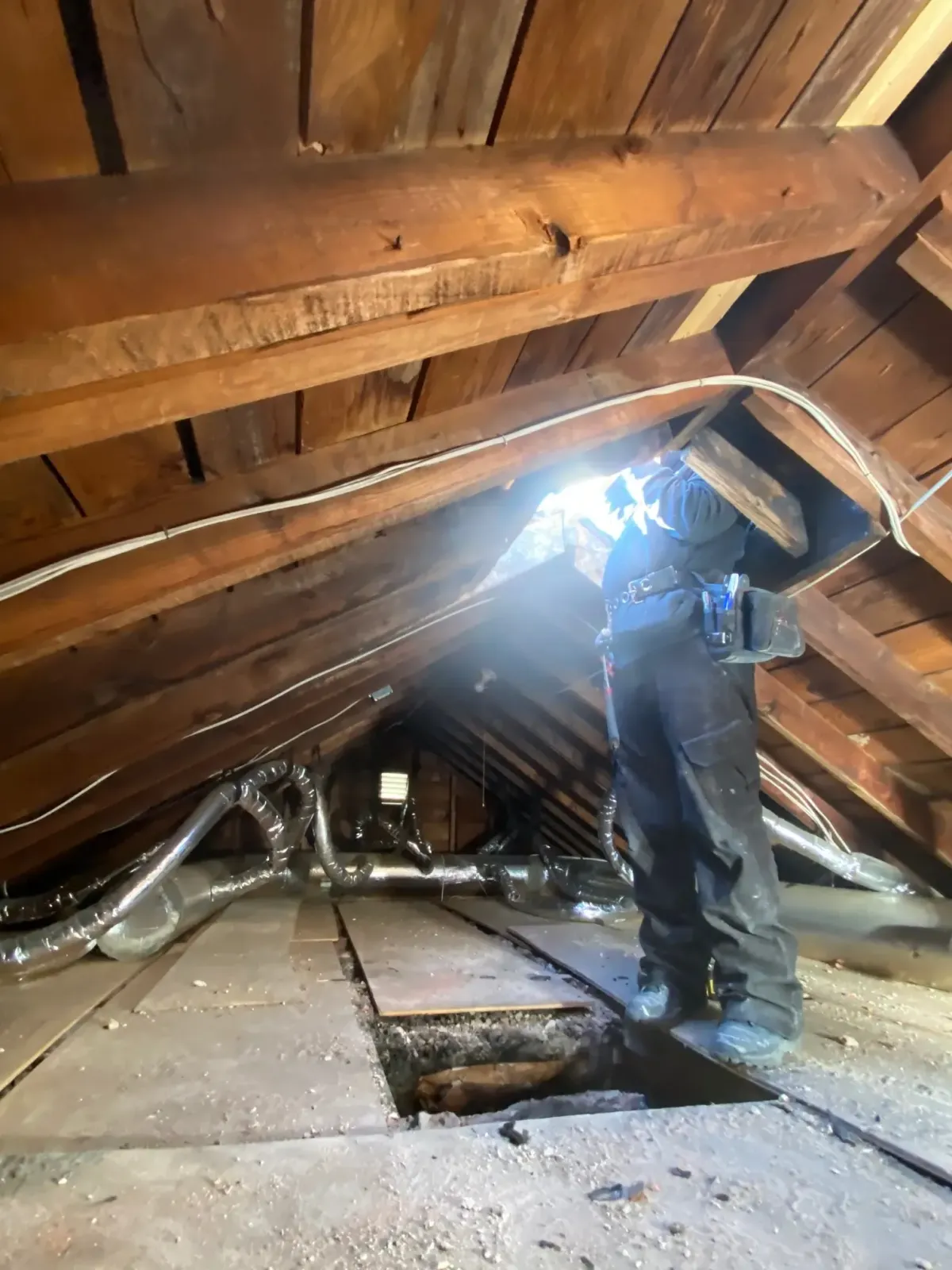
The first challenge was the boiler in the basement, which was exhausting carbon monoxide through the chimney. We rerouted the exhaust through the basement wall and installed a centrifugal duct fan to ensure safe evacuation before any masonry work began. Plastic wall systems, full flooring protection, and HEPA air scrubbers were installed throughout to protect the home. Our mason removed the chimney below the roof line, and our roofer immediately patched the opening to make it weather tight. The remaining chimney, fireplace, and a 10-inch concrete pad beneath the hearth were removed over a few days — a heavy demolition process. Our carpenters then opened the walls, installed a new LVL beam to replace the load-bearing wall between the living and dining rooms. We replicated the textured ceiling when it was repaired. The oak flooring was patched where the fireplace had been, and the entire main level was sanded and refinished for a seamless look. Trim was fabricated to match the existing profiles throughout the home. The result is a single open living and dining space with no trace of the fireplace, chimney, or wall that once divided it.
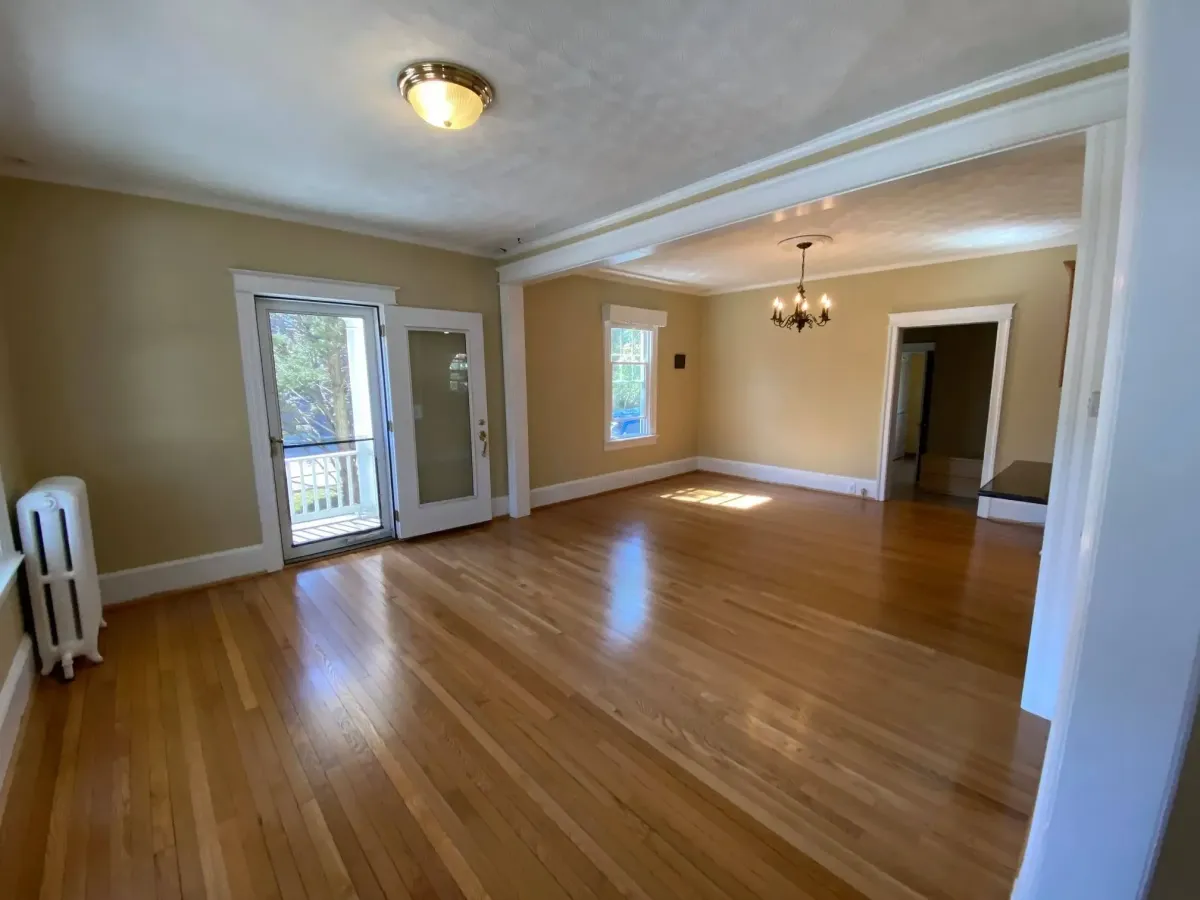
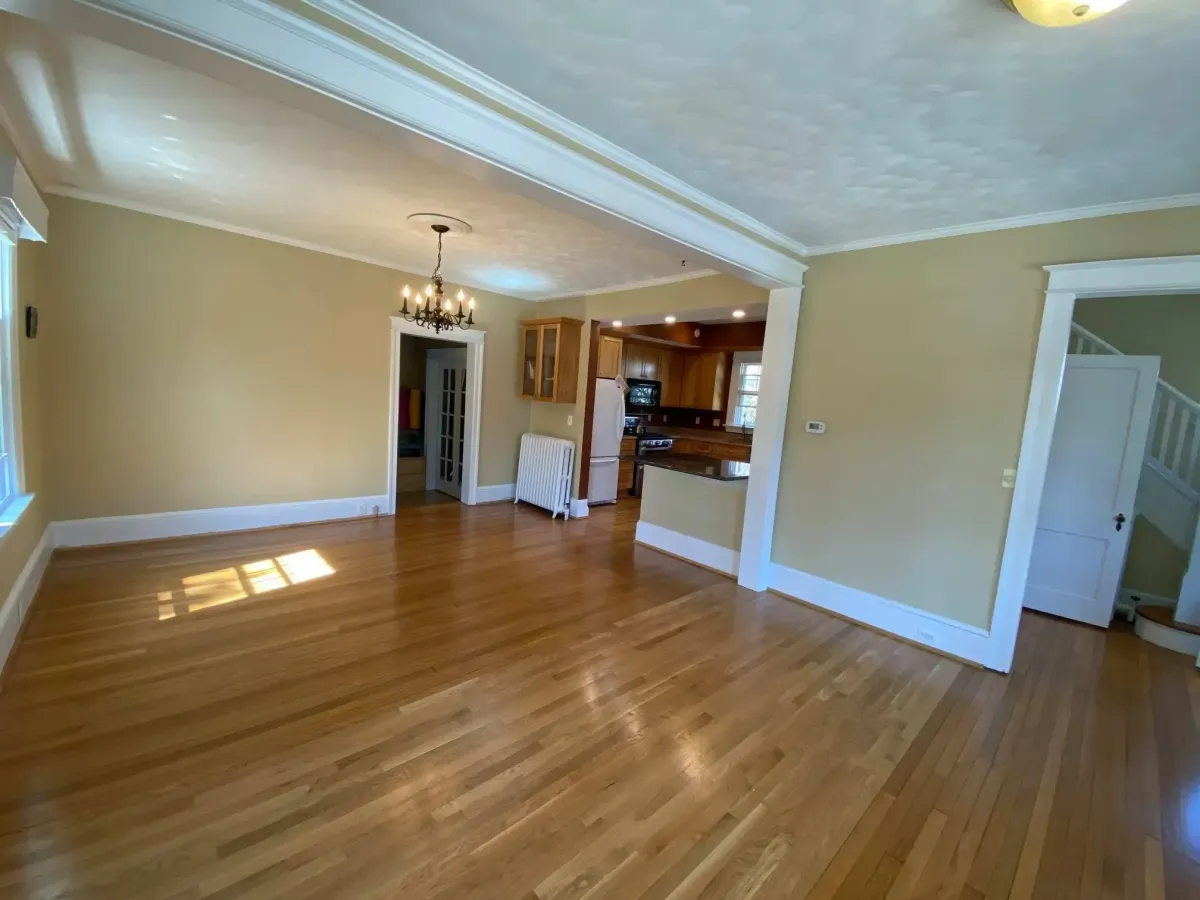
Fairfax Station Virginia — Missing Load Bearing Wall Structural Repair Between Kitchen and Family Room
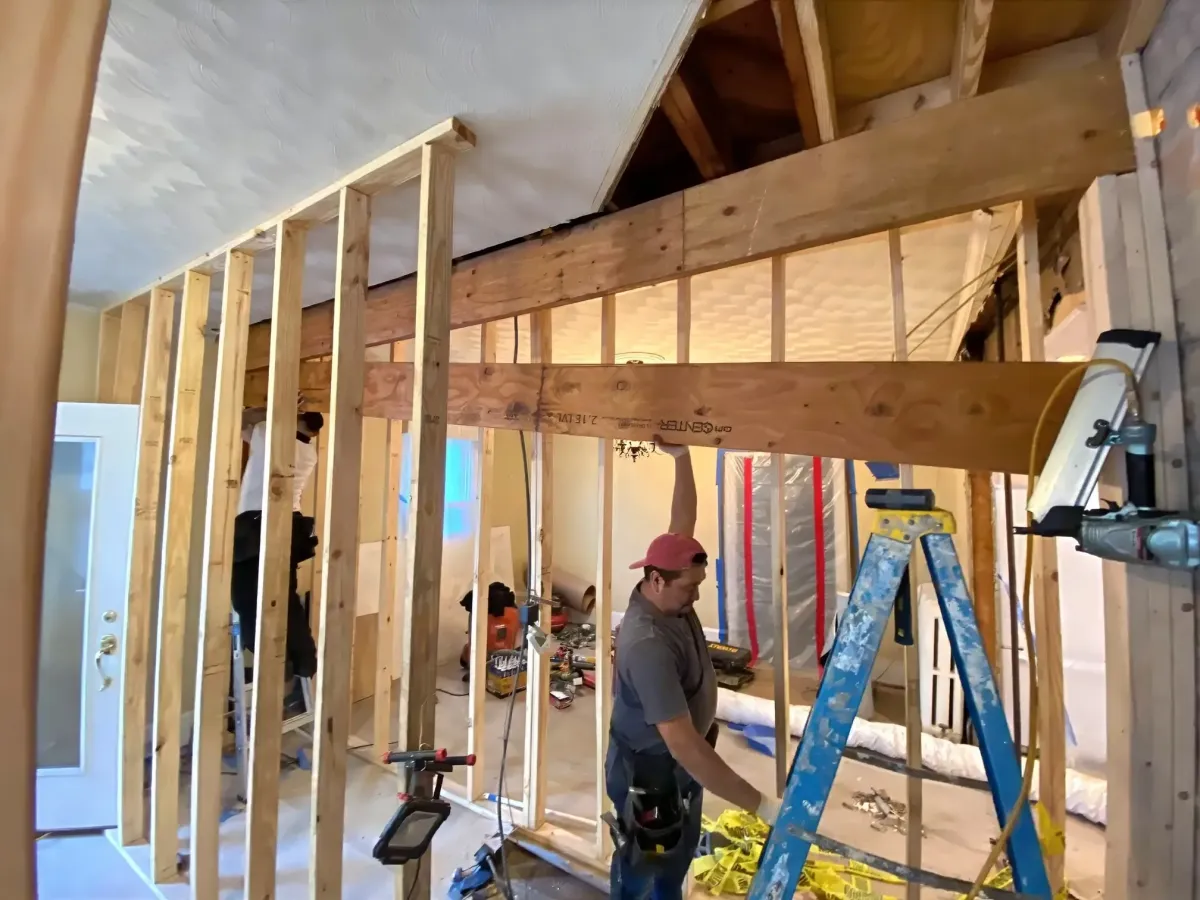
When this Fairfax Station Virginia homeowner purchased their home the floor plan between the kitchen and family room was already open — and the recent renovation looked clean. Within two months of moving in, cracks began forming on the two-story family room wall and their child's upper level bedroom floor developed a noticeable dip. After investigating they received alarming news — a load-bearing wall supporting the second floor had been removed without permits by an unlicensed contractor, and that section of the second floor was effectively floating in the air. A previous contractor had attempted to build a temporary wall to stabilize the situation, but that wall wasn't sound either. They were referred to HandyMensch after several false starts. Our first priority was the structural stability of the home and the safety of the family living in it.
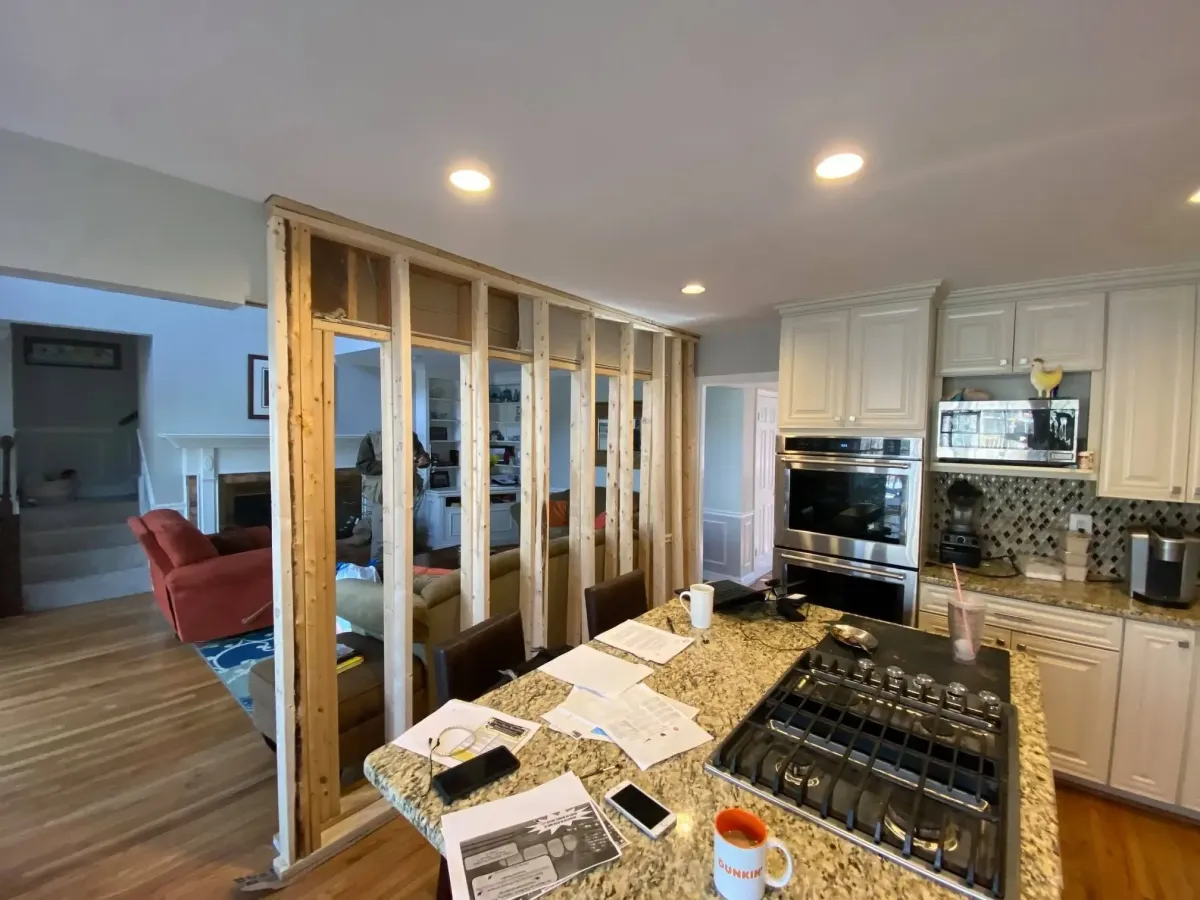
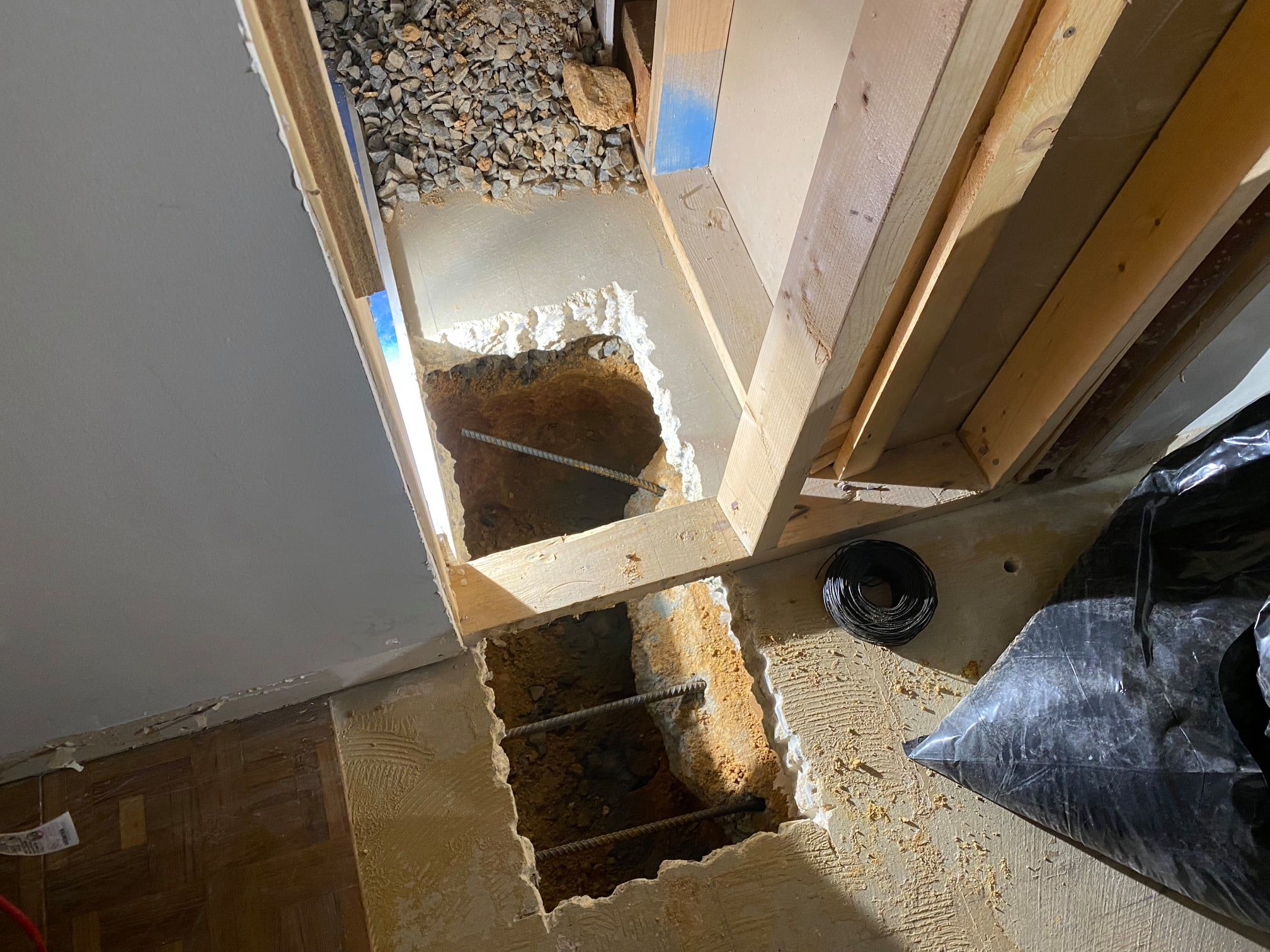
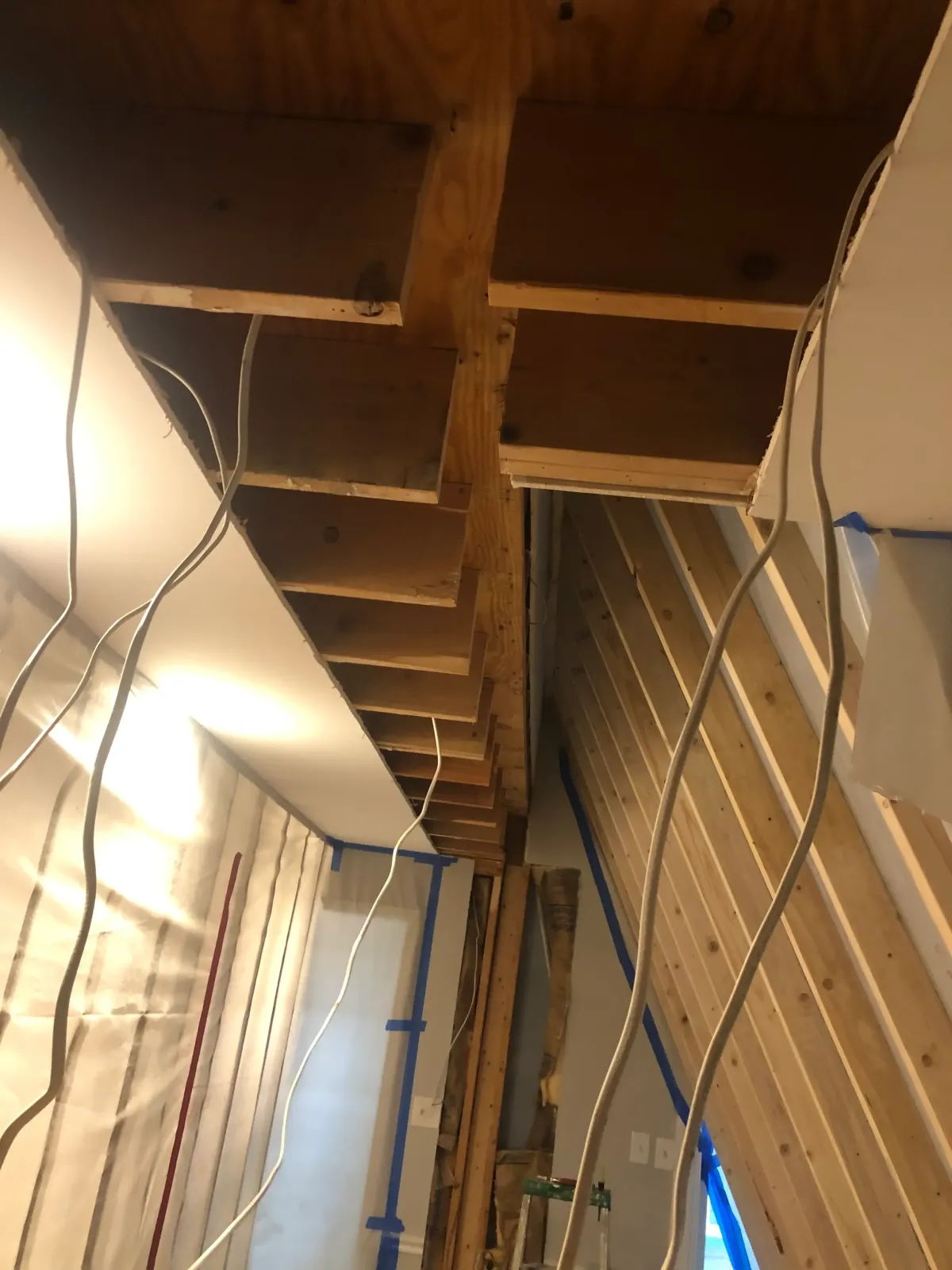
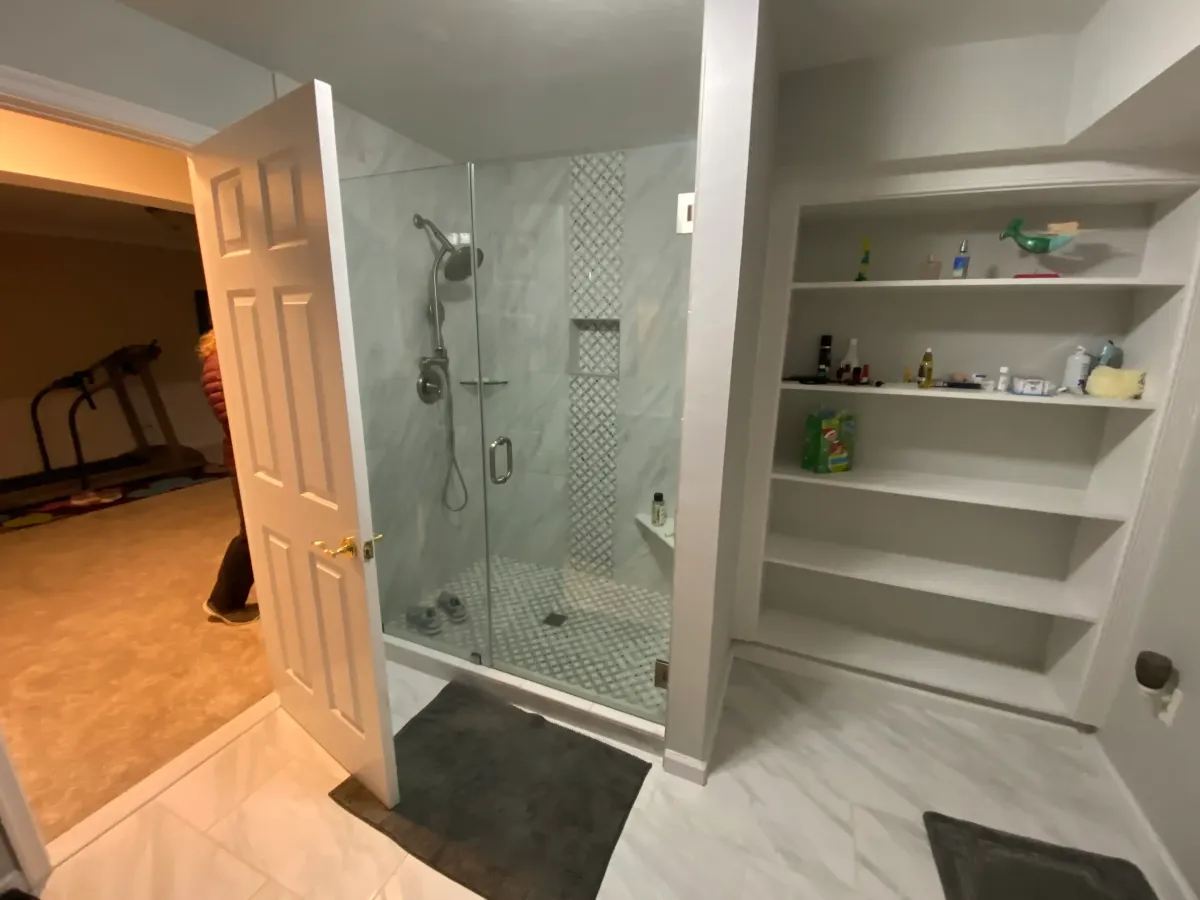
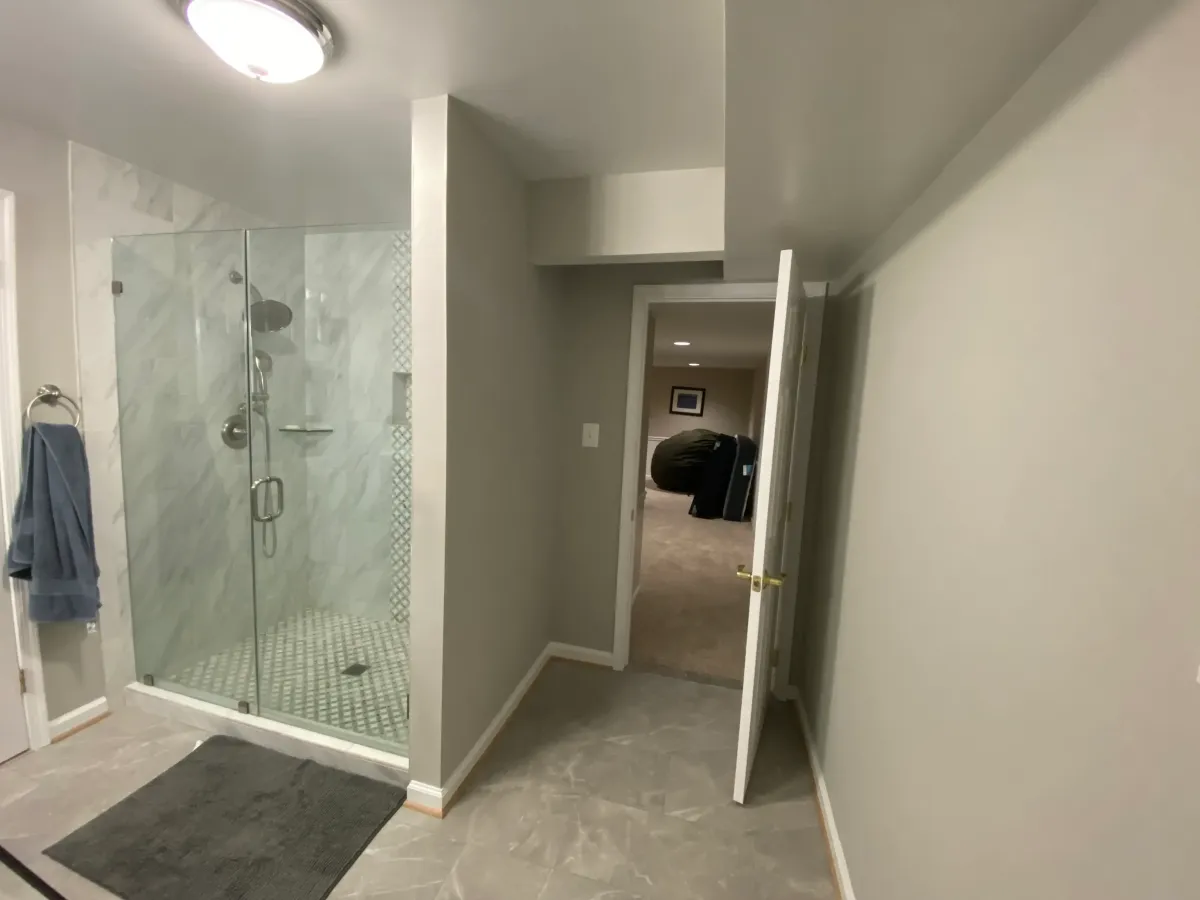
We built a proper temporary wall so the family could feel safe living in the home while we performed a full structural engineering evaluation. The design called for a multi-ply LVL beam spanning 22 feet and enlarging a concrete footer to properly support the second floor load all the way to the ground. A project of this complexity requires a detailed plan— a roadmap covering timelines for every trade before work begins. The structural repair affected flooring, drywall, and electrical throughout the impacted area. Due to the increased point load from the new beam, we cut the concrete slab in the basement and expanded an existing footer — which sat directly in the basement bathroom, requiring us to remove and replace the tile floor as part of the scope. Every phase was managed while the family continued to live in the home. Along the way our team uncovered a variety of hazardous electrical and plumbing problems that did not meet code. The completed project restored full structural integrity to their home.
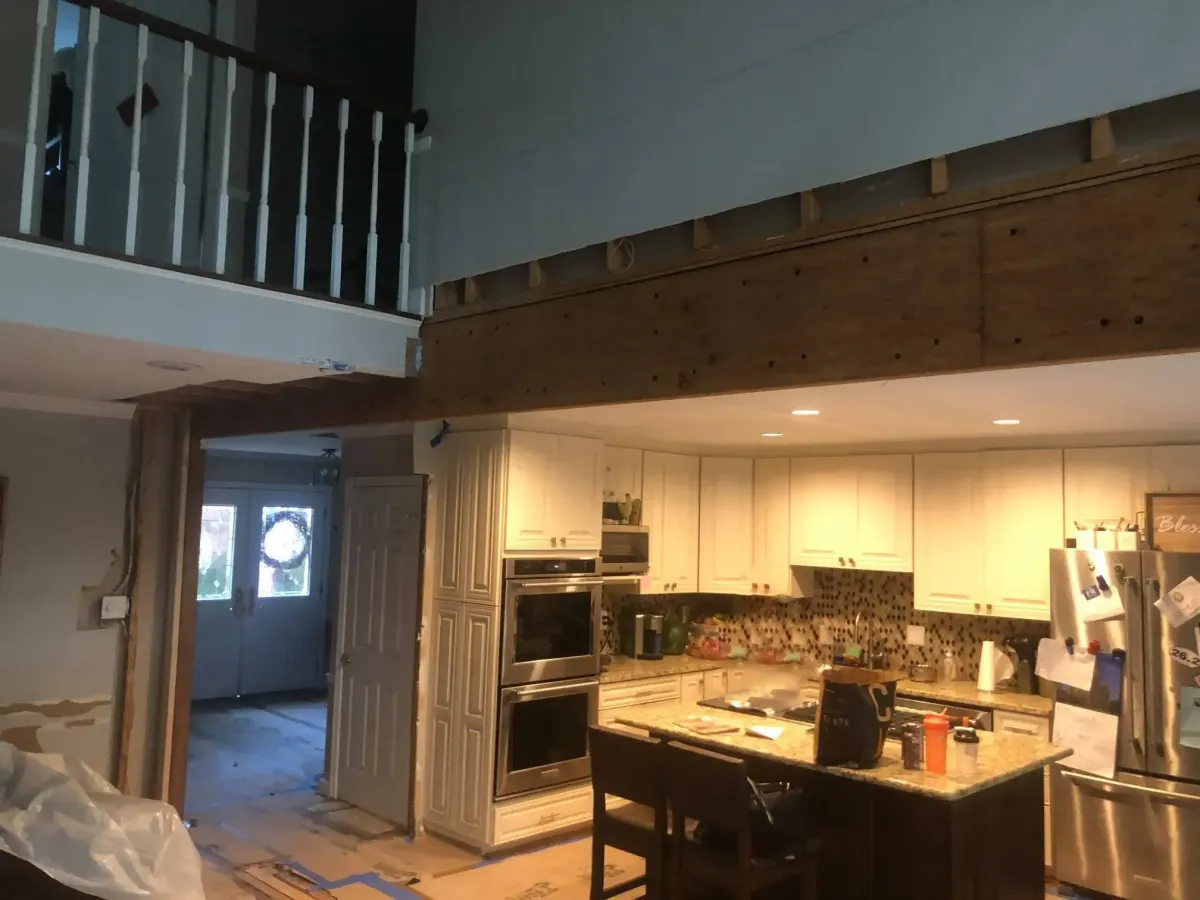
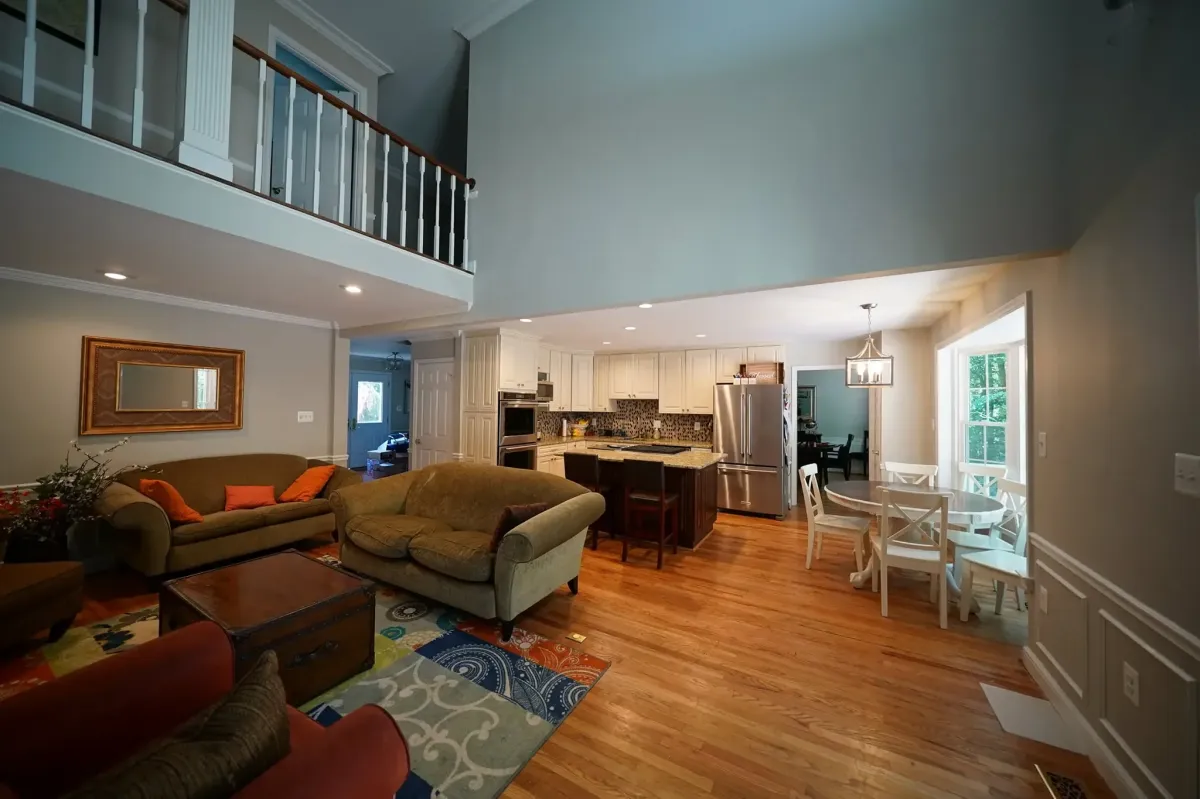
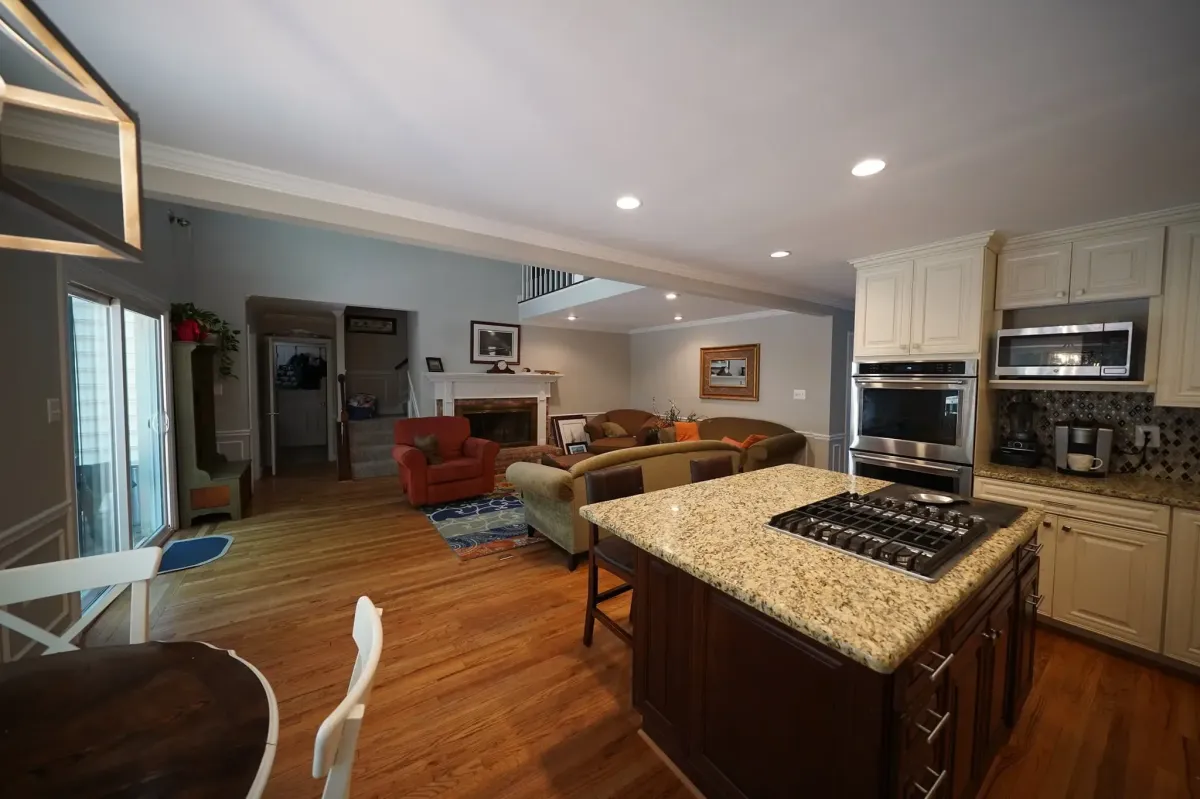
Structural integrity is the foundation — but the de-construction and re-construction of a finished living space is equally demanding. Opening walls, replacing floors, rerouting electrical and plumbing, and rebuilding finished surfaces while a family of four and their faithful dog Moose continued living in the home required working with surgical precision.
When the engineer called for the footer enlargement we knew it would impact the basement bathroom floor. We identified a replacement tile that coordinated with the existing shower, then replaced the entire floor so it worked as a cohesive space rather than a patchwork repair. The homeowner requested we replace a built in bookcase with a door to the hallway.
With four people (and Moose) living in the house we planned the construction sequencing carefully — protecting multiple rooms across two floors, keeping the kitchen accessible throughout, and managing the temporary two story family room wall support while the new beam was installed. The client had also identified electrical and plumbing issues we needed to evaluate after demolition — non-compliant, hazardous work left behind by the unlicensed contractor — which we resolved as part of the scope. When the project was complete the family had a structurally sound, fully restored home. HandyMensch - Every trade. Every detail. One team.
Fairfax Station Virginia Kitchen Remodel w/ New Flitch Beam
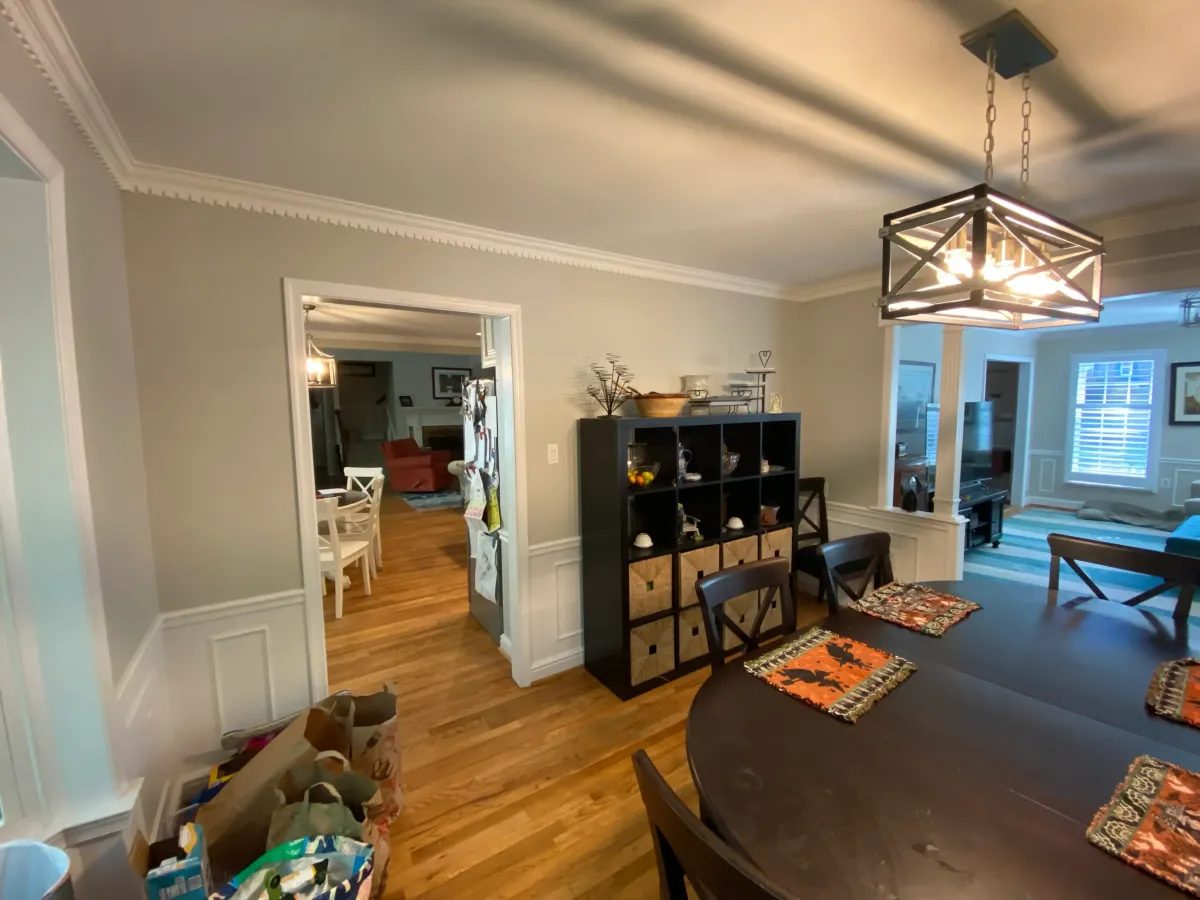
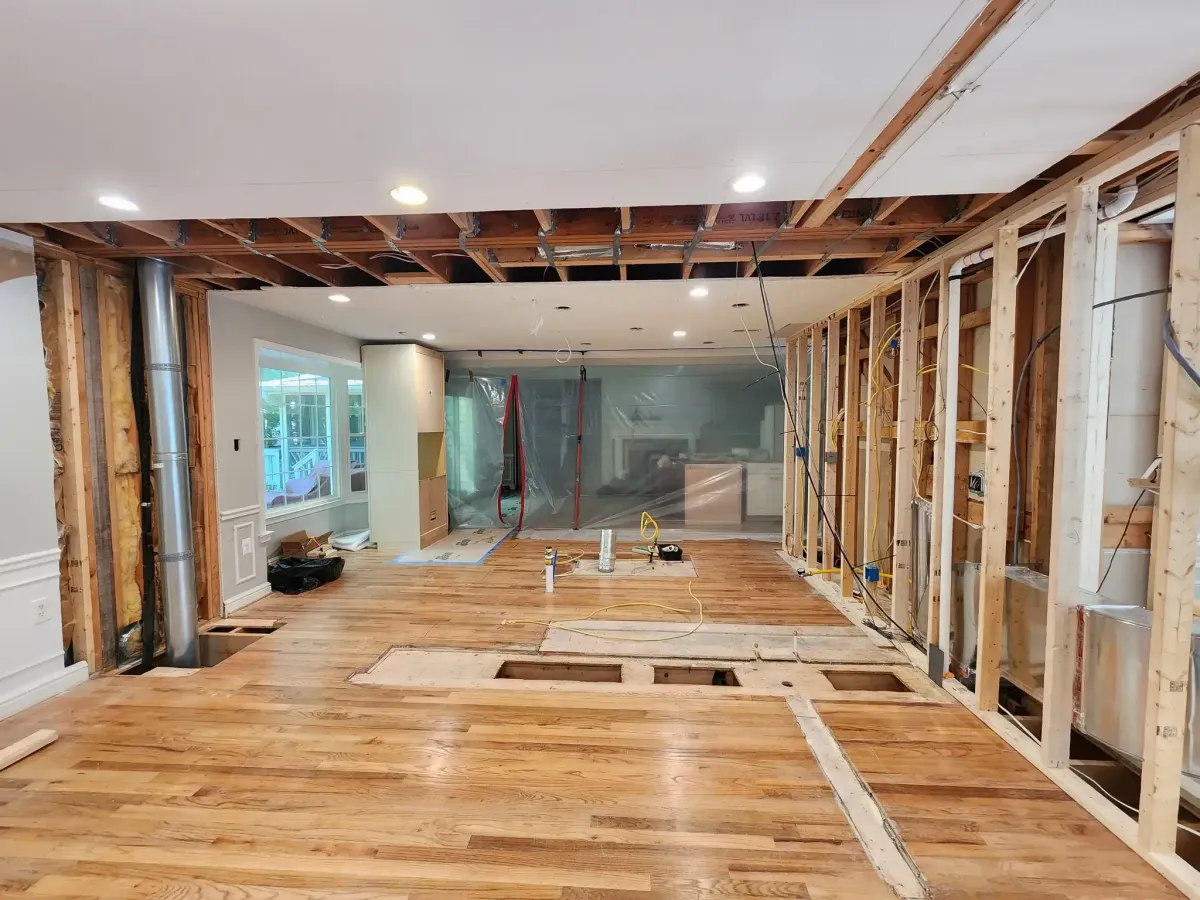
This Fairfax Station Virginia home — built in the 1990s with a traditional floor plan — had a formal dining room that the family never used the way it was intended. The wall separating the dining room from the kitchen was load-bearing, and the HVAC duct work serving the upper level ran directly through it. The client's vision was to absorb the dining room entirely into an expanded kitchen — creating the kind of open, functional cooking and gathering space the original floor plan never provided. Before any walls opened we brought in our structural engineer to design the flitch beam solution and mapped out the HVAC plan with our mechanical contractor. Because the HVAC duct work ran through the load-bearing wall, we added a second zone in the attic with a new system. The wall came down and was replaced with a flitch beam — three LVL beams with two steel plates — spanning the full opening. The concrete footer in the basement was expanded to support the increased point load from the new beam. The family lived in the home throughout — protected by plastic wall systems, flooring protection, and air scrubbers at every phase.
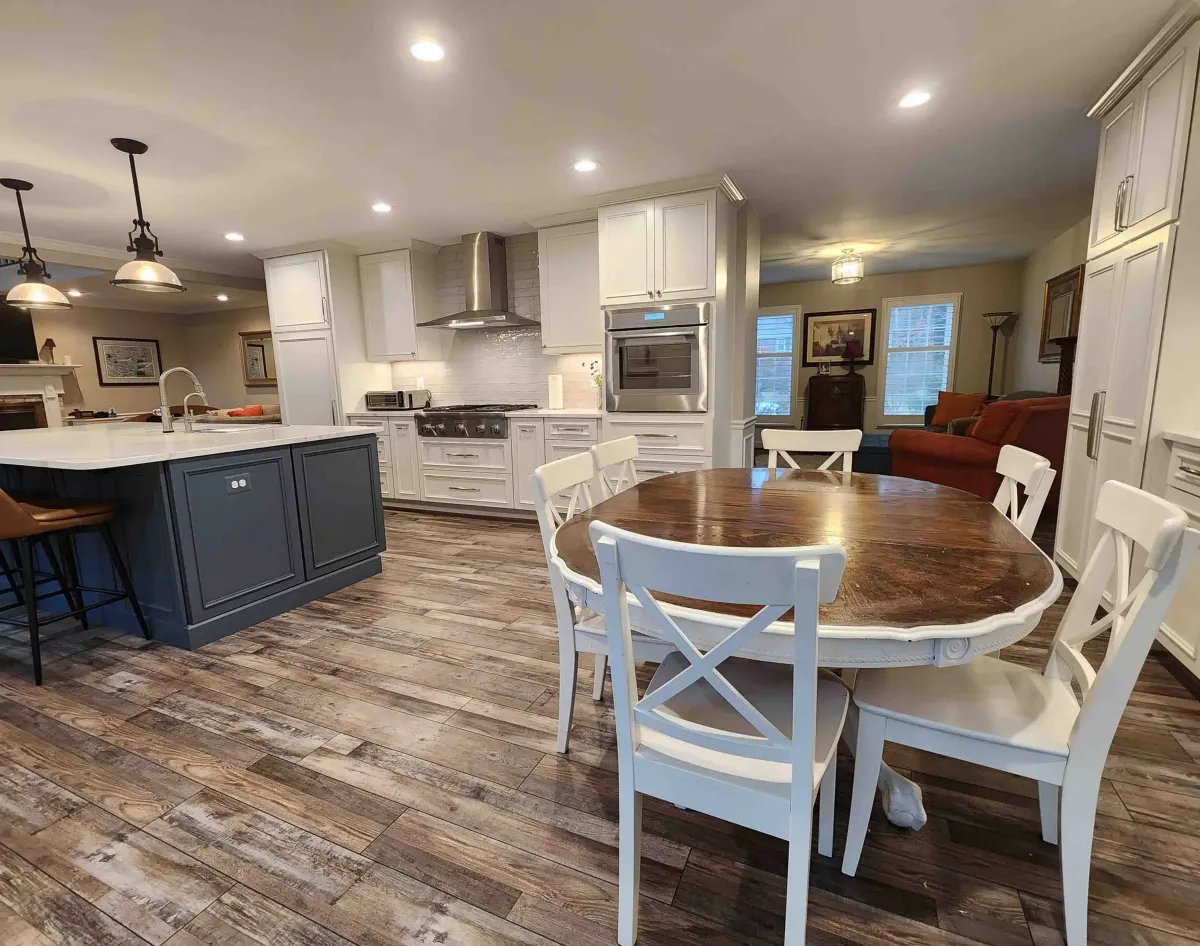
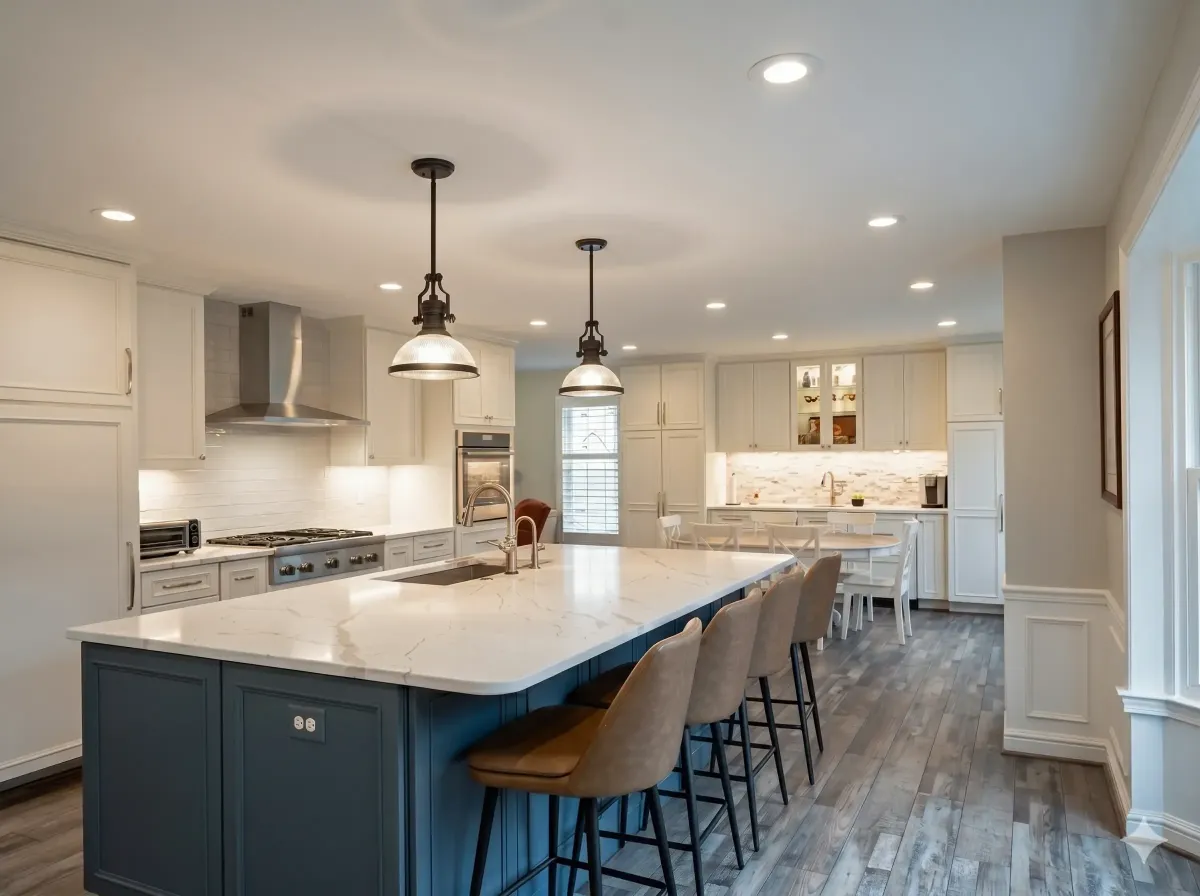
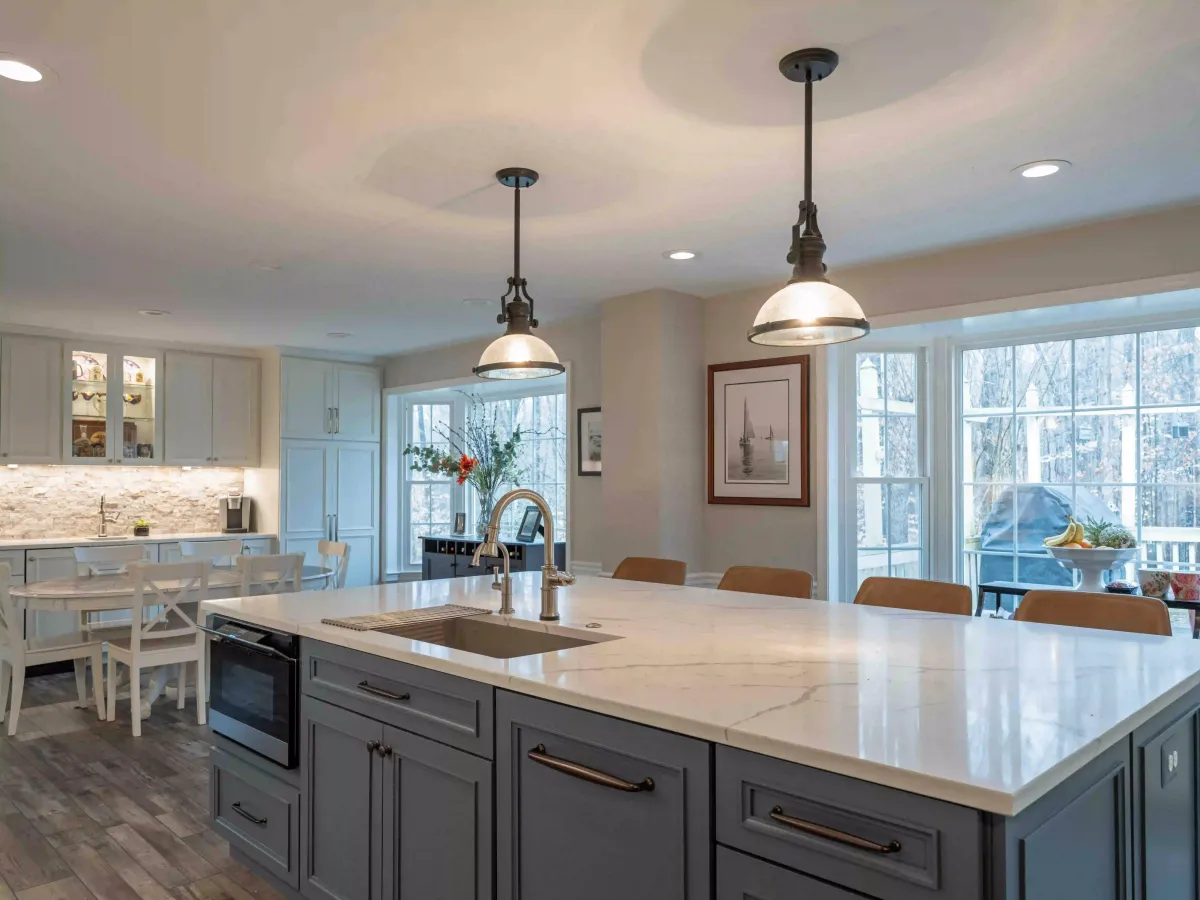
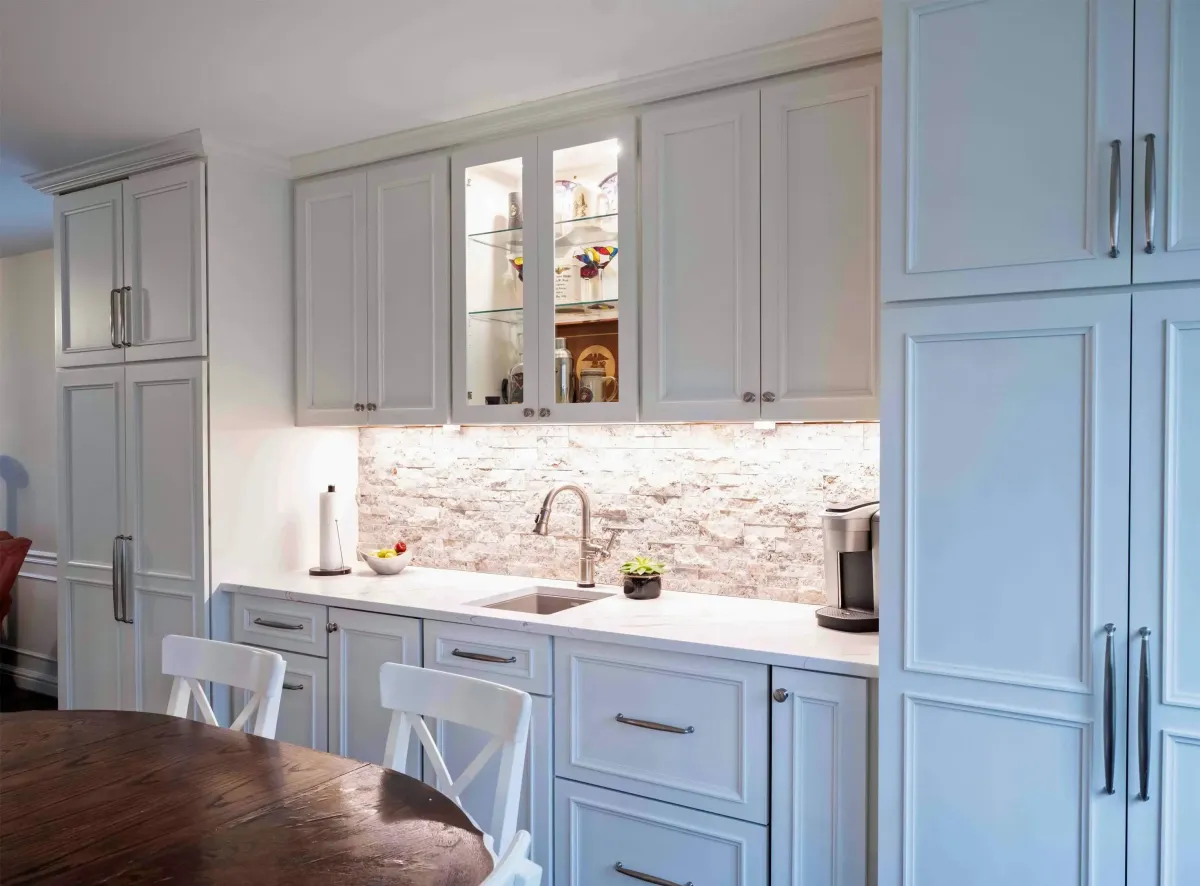
With the structural and mechanical work complete, the full kitchen remodel began — new layout, new cabinets, new countertops, new appliances, a custom island, and new lighting throughout the main level. The former dining room space became the island and expanded prep area, giving the kitchen a footprint and functionality it never had in the original design. The completed kitchen is a good example of what becomes possible when structural capability and design-build process work together. The formal dining room that sat unused for years is now the heart of the home — the island anchors the space where the wall once stood, and the open sightline through to the living area completely changes how the main level feels and functions. Every element of this project — structural engineering, HVAC redesign, permit management, kitchen design, and finish installation — was managed under one roof, on one proposal, by one team.
Reston Virginia Load Bearing Removal - Flitch Beam
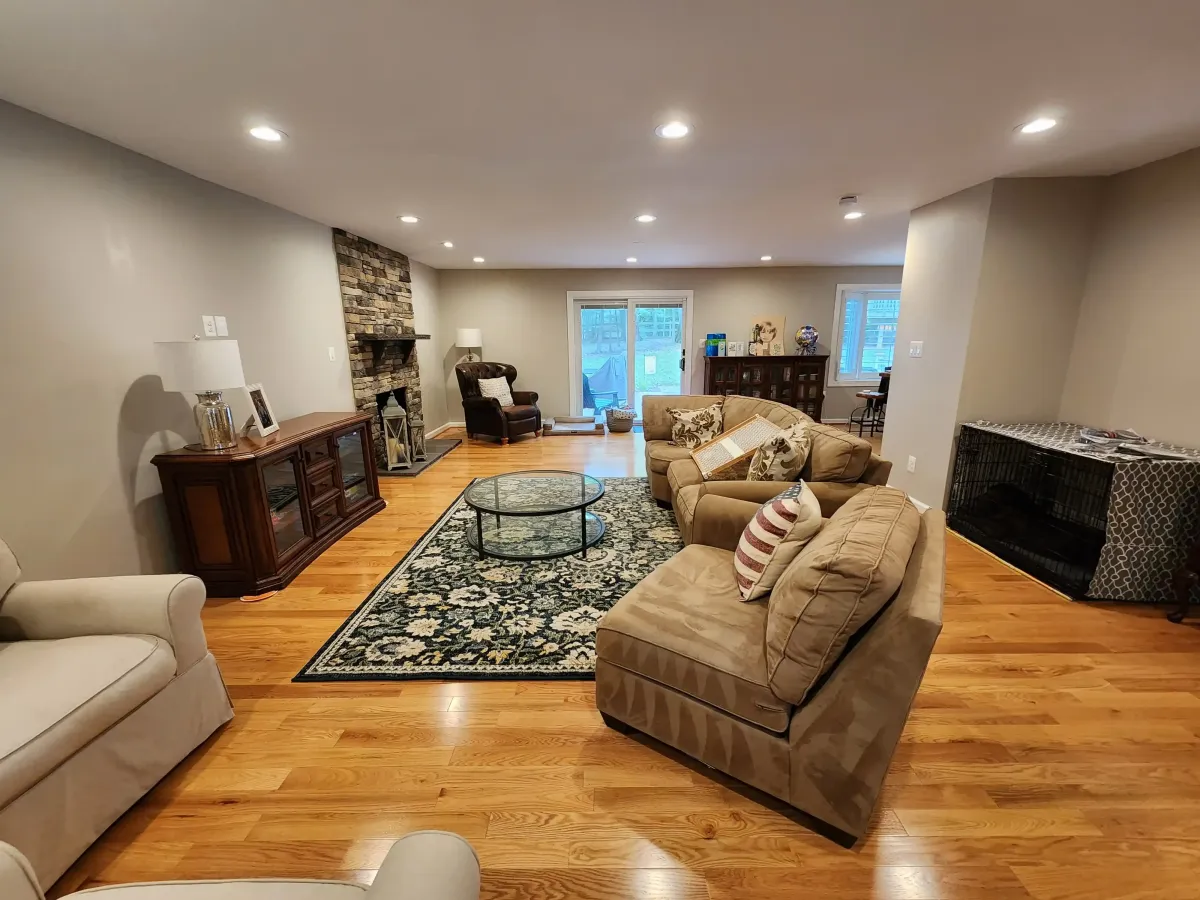
Our client had a typical 1970s floor plan with a small living room and a small family room. They wanted to open up the center load bearing wall to create one open space that would work better for living in the space and let more natural light into the rooms throughout the day. This project is a great example of why we incorporate the structural engineering as part of our design process rather than letting homeowners get their own engineer. When we initially ran the numbers for a 19 foot beam (the full width of the space) there were a couple of issues. (1) The beam would be too tall and have to stick down below the ceiling (2) It required a footer enlargement in the client's recently remodeled basement to transfer the load properly.
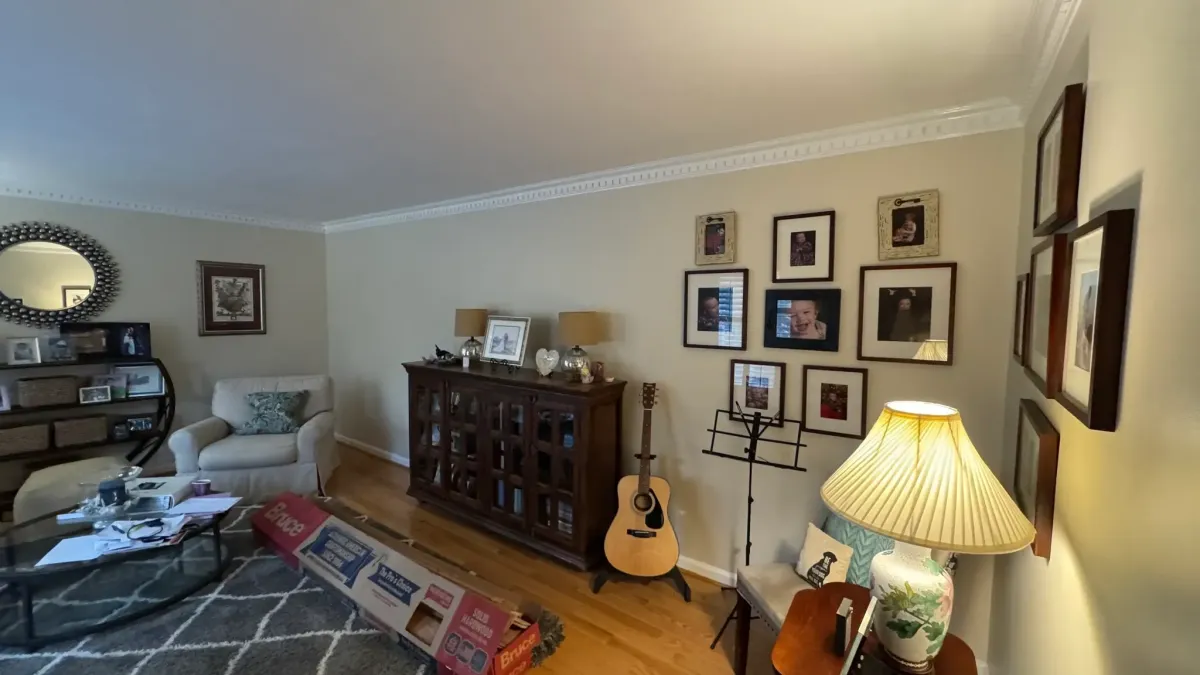
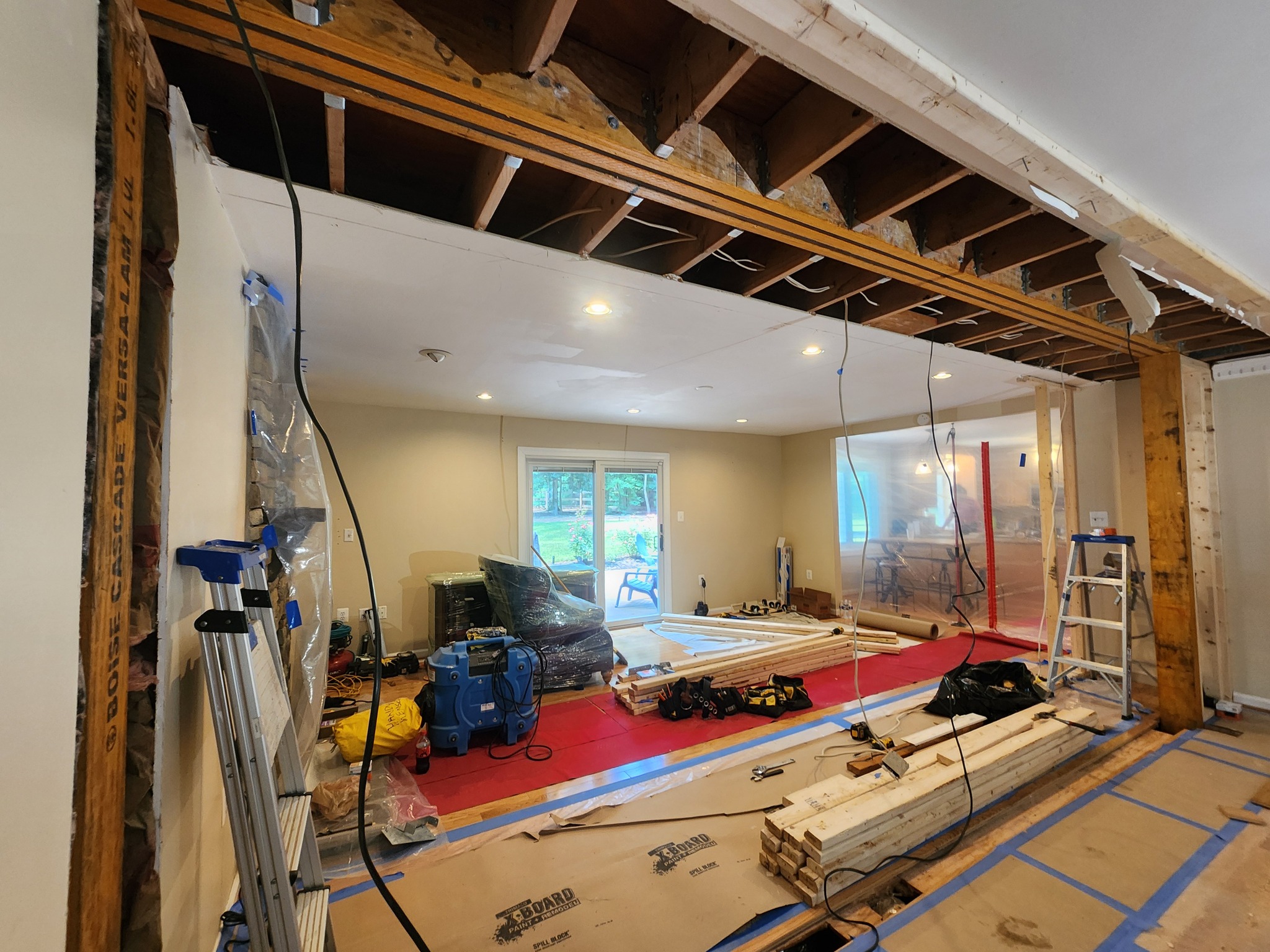
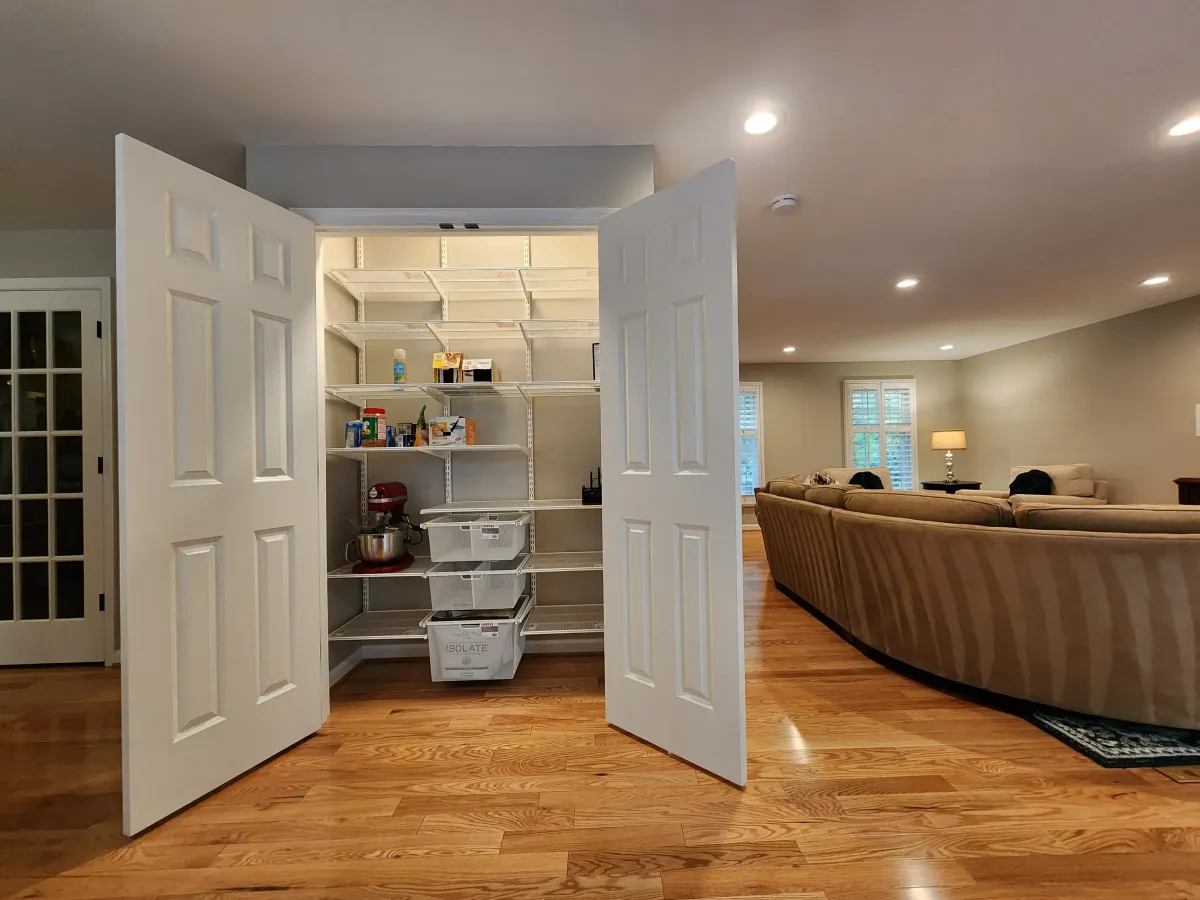
Our team brainstormed on the issue and came up with the perfect solution. The client's pantry closet was very small and sat at the edge of the family room. We went back to the engineer and said what is the longest beam we can install that will be flush with the ceiling and not require a footer enlargement. The math said a 17' flitch beam with (3) LVLs (2) 3/4" steel plates would work. We enlarged the pantry which allowed us to place a wall at the end of the beam and doubled the client's pantry space. It looks like the house was built with this design.
Don’t just take our word for it!
See what our past clients have to say...
Expand your space, the right way with HandyMensch.





Copyright 2007 - 2026. HandyMensch Home Remodeling. All Rights Reserved.
Website designed by Zen Monkey Marketing